

Parking Lot Striping Cost in Northern California (2026): Real-World Price Ranges and What Drives Them

If you’re searching parking lot striping cost, you’re probably doing two things at once:
- Trying to protect your budget
- And trying to avoid a messy, last-minute scramble after you’ve waited a little too long to restripe
You’re not alone. Striping is one of those projects that’s easy to put off, especially if you’re not sure how much it will cost.
There are lots of details that go into an accurate striping bid, but to give you a quick cost range for Northern California in 2026, most commercial restriping projects land somewhere between $0.20–$0.45 per linear foot for standard 4-inch lines, with specialty markings (ADA symbols, arrows, crosswalks, fire lanes, curb paint, signage) priced as add-ons.
This guide breaks down what you’re actually paying for, typical cost ranges by property type, the biggest pricing drivers, and how to avoid surprises.
What you’re actually paying for
Striping is not “just paint.” You’re paying for layout accuracy, compliance, traffic control, and the choreography required to mark a live property without blocking access.
Standard stall lines and traffic arrows
Most bids start with the basics: 4-inch stall lines, end lines, and directional arrows that keep traffic moving.
Standard line pricing is often quoted per linear foot (or per stripe/per stall), which is why two lots with the same square footage can price differently if one has tighter geometry or more turns.
ADA stalls, access aisle markings, and curb ramp alignment
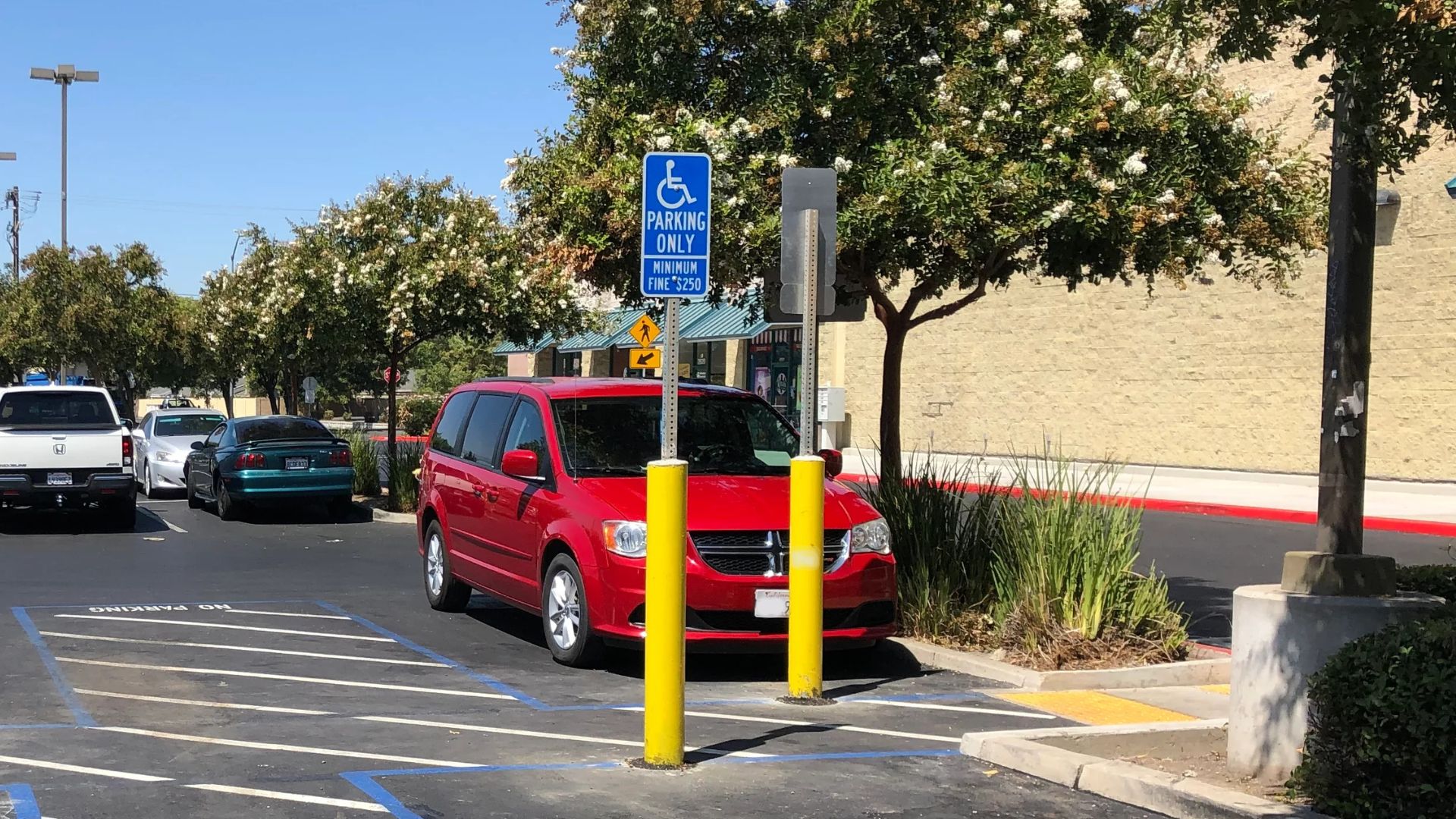
ADA parking lot striping is where “simple restripe” often becomes “we should fix this now.”
This includes coordinating stall count, aisle markings, signage, and the reality of where curb ramps and accessible routes actually land. It’s an investment in risk reduction.
Fire lanes, STOPS, loading zones, and crosswalks
These markings are high-visibility and high-stakes.
Crosswalks, loading zones, STOPS, and fire lanes are some of the most important markings to keep up on, as they are often the only markings that help slow down traffic where pedestrians are present. Fire lanes keep areas clear for fire truck access.
Stencils, numbers, and legends
“NO PARKING,” unit numbers, “RESERVED,” EV markings: these make a lot feel “managed,” not neglected.
Many contractors price letters/numbers and specialty stencils separately because they’re slower, require more setup, and often use multiple colors.
Signage installation
If you’re adding or replacing signs (ADA parking signs, van-accessible signs, loading zone signs), that’s typically a separate line item for materials and installation.
If you want fewer vendors and fewer scheduling headaches, bundling striping and signage under one partner is usually worth it.
Typical striping cost ranges in Northern California (by property type)
Striping cost ranges aren’t just about “how big is the lot?” but also “how complicated is it?”
Geometry, compliance needs, and traffic control can push a small project higher than a bigger, simpler one.
Small retail, medical, and office properties
For lots in the 20–40 space neighborhood, many Northern California examples land in the $800–$2,500 range, depending on how much is included (arrows, ADA refresh, curb paint, crosswalks, signage).
Mid-size shopping centers
As you add more stalls, drive lanes, crosswalks, loading zones, and tenant-specific markings, projects commonly move into the $2,000–$6,000 band (and higher for complex centers or heavy after-hours constraints).
Shopping centers also tend to have lots of “extra” scope like fire lanes, crosswalk refreshes, curb paint, and signage, because there’s more public-facing traffic.
Industrial and distribution sites
Industrial sites are interesting: the geometry can be simpler, but the footage is often massive.
If you’re doing long runs of lanes, dock approaches, arrows, and safety zones, totals often scale into the $5,000–$15,000+ range for larger facilities.
Often the real driver here is operational constraints like keeping truck routes open and striping during tight windows.
HOAs and private roads
HOA and private road striping can be deceptively complex because you’re not just striping, you’re managing resident access, parking compliance, and phasing so people can still get home.
Striping costs can be as low as $800–$2,500 for smaller communities or courts, or up to $5,000–$15,000+ for larger communities (100–200+ spaces, long private drives, multiple phases, lots of stencils).
The 7 biggest cost drivers
This is the part most people wish they knew before they asked for three bids. If you understand these drivers, you can tighten scope and get cleaner, more comparable pricing.
1) Lot size and number of stalls
Striping is frequently priced per linear foot or per stall/stripe. All other things being equal, a larger lot with more stalls will have higher striping costs than a smaller one.
So yes—size matters. But it’s not the only lever.
2) Layout changes vs. restripe “as-is”
Refreshing faded lines is typically faster than redesigning.
New layouts take more field measuring, snapping, verifying stall counts, and confirming circulation, often adding meaningful labor time.
If you do want a reset, it helps to say that clearly so bidders can scope it accurately.
3) ADA compliance updates
ADA updates can range from “refresh the existing accessible markings” to “rework the layout to match current requirements and accessible routes.”
The safest approach is to treat ADA as a scoped conversation, not a quick add-on. Working with an ADA-expert contractor will ensure that your lot won’t have to be reworked again in the near future.
4) Surface condition and prep timing
Striping over a rough, oily, dusty surface doesn’t last. If the lot needs crack sealing, patches, or sealcoat first, you’ll either pay for prep or you’ll pay later when it fails early.
5) Traffic control and after-hours work
If you need night work, weekend windows, flagging, cones, barricades, or phased closures, then specialized labor and tight work windows can drive costs up.
6) Paint/material choice and durability expectations
Standard paint is common and cost-effective, but some sites opt for more durable systems depending on traffic and wear.
Pricing by material can vary significantly (paint vs. thermoplastic vs. epoxy), but more expensive options might actually be cheaper over the lifecycle of the lot.
7) Mobilization and travel for multi-site portfolios
Most contractors build in mobilization/overhead, and smaller projects can feel “expensive per stall” because those fixed costs don’t shrink just because the lot is small. If you manage multiple sites, bundling work into a route can improve pricing and consistency.
When to stripe in Northern California (and how it pairs with sealcoat)
Timing isn’t just a scheduling detail, it’s how you get the best life out of your investment. Stripe at the wrong time (or on the wrong surface) and you’re basically paying twice.
Stripe after sealcoat, not before
It may seem obvious, but if you’re sealcoating, striping happens after the sealer has cured enough to accept paint and hold it. Many maintenance plans bundle crack sealing + sealcoat + striping because it reduces mobilizations and gives you a clean, “re-imaged” lot at the end.
This is also where ADA, safety markings, and signage upgrades naturally fit, because you’re already resetting the property’s visual guidance.
Stripe before winter
Faded striping is almost invisible when a parking lot is wet from rain.
Which is why it’s becoming common practice to refresh striping even if you’re not due for a seal coat this year, especially in high-traffic centers like malls.
This keeps your markings clear, your customers and community safe, and your liability in check.
Stripe after repairs that change the surface
If you’re patching, milling, or adding speed bump markings, handle those first—then stripe the final configuration. Otherwise you end up paying to paint lines that get cut out or shifted mid-project.
If you want the simplest path (and the cleanest budget story internally), bundle your pavement maintenance work and treat striping as the final “open-for-business” step.
If you’re already planning crack sealing, sealcoat, or repairs, it’s usually smarter to bundle striping and signage with the same partner so you’re not coordinating multiple schedules.
See our full Northern California parking lot paving guide to see how to fit striping into an efficient lot maintenance plan.
How to get an accurate quote (and avoid surprises)
If you want pricing that’s truly comparable, help contractors bid the same scope.
It might feel like extra work, but you’re preventing the “oh, we didn’t include that” change orders later.
What to send (even if it’s quick and scrappy)
- The property address
- A simple aerial screenshot with the area to be striped highlighted
- Hours of operation and any “no-go” windows
- Whether you want restripe as-is or a layout reset
- A list of must-haves: ADA stalls, fire lanes, crosswalks, curb paint, arrows, stencils, signage
- Any known ADA concerns (or a request for the contractor to flag them)
Two minutes of clarity on the front end can save you days of back-and-forth.
Get efficient, quality striping at competitive local rates
If you’re ready to get real numbers, send over that info or just give us a call and we’ll walk through it with you.
We’ll tell you what you’re really looking at—scope, phasing options, and a budget range you can trust—then you can decide the smartest next step with confidence. And if you want one partner for striping, signage, and the pavement work that supports it, A-1 Advantage can handle it all efficiently so you don’t have to micromanage.


FOLLOW


STAY UP TO DATE
Thank you! Your submission has been received!
Oops! Something went wrong while submitting the form.
Contractor’s State License #762538 - #882596
Copyright ©2024 A-1 Advantage Asphalt. All Rights Reserved.
Website Built by RUSTY GEORGE.
Copyright ©2024 A-1 Advantage Asphalt. All Rights Reserved.
Website Built by RUSTY GEORGE.