

Bollard Installation Cost in Northern California (2026): What Commercial Properties Should Budget For
Most bollard budgets are actually decided below the pavement.
The steel post is visible; the excavation, concrete footing, utility coordination, and surface repair aren't. That's why two prices for what looks like the same row of bollards can be thousands of dollars apart.
We’ve helped dozens of properties across the Bay Area, Central Valley, and beyond install sturdy, cost-effective bollards.
If you're planning a commercial installation in Northern California, this guide gives you a realistic starting range and shows you what can move it.
Quick Answer: How Much Does Bollard Installation Cost?
For 2026 planning, a reasonable budget for a standard embedded, non-crash-rated commercial bollard in Northern California is about $1,000 to $2,500 per installed bollard. This generally assumes a fixed steel bollard set in a concrete footing within an existing asphalt or concrete area.
Straightforward installations with several identical bollards may land near the lower end. Small projects, difficult access, heavy demolition, utility conflicts, or extensive surface restoration can push the cost higher.
Other common planning ranges include:
- Simple surface-mounted bollards on suitable concrete: approximately $500 to $1,200 each
- Engineered crash-rated or automated systems: often $4,000 to $12,000 or more per unit, with complex security systems running considerably higher
These are general 2026 planning ranges based on published industry estimates and public bid data. To get a quote on your specific project, get in touch and we’ll tailor it to your property and needs.
What Does an Installed Bollard Price Include?
"Installed" can mean different things from one proposal to another. A complete price for a standard fixed bollard may include:
- The bollard and a basic painted or protective finish
- Layout, mobilization, and site preparation
- Saw cutting, core drilling, or excavation
- Concrete footing, reinforcement, and concrete fill
- Equipment, labor, debris removal, and cleanup
- Minor asphalt or concrete restoration around the installation
Engineering, permits, utility relocation, extensive pavement replacement, custom finishes, specialized traffic control, and after-hours work may be separate. Compare proposals scope by scope. A low unit price isn't a bargain if the footing, restoration, or traffic control you need has been left out.
A1 Advantage Asphalt and Concrete is known for thorough, accurate quotes so you can budget with confidence.
Seven Factors That Drive Bollard Installation Cost
1. The protection goal and bollard specifications
A bollard that guides traffic has a different job than one protecting a storefront, pedestrian path, utility cabinet, or loading area. Diameter, wall thickness, height, spacing, finish, and impact requirements all affect the product and footing. Start with the risk you're addressing so the contractor can recommend the right commercial bollard installation.
2. Surface-mounted versus embedded installation
Surface-mounted bollards are anchored to an existing slab. Installation can be faster when the concrete is sound and the bollard is intended for visibility, guidance, or light-duty protection. Embedded bollards require drilling or excavation and a concrete foundation. They cost more but are generally used where stronger protection is needed.
3. Existing asphalt, concrete, and base conditions
Installing in an existing parking lot usually requires cutting or drilling the surface, removing material, constructing the footing, and repairing the area around the finished bollard.
Thick or reinforced concrete takes more time and heavier equipment to penetrate than asphalt. Damaged pavement or an unstable base may require a larger repair. If bollards are part of a broader asphalt repair and maintenance project, coordinating the work may reduce repeated mobilization and restoration.
4. The number of bollards
Every project carries setup costs for mobilization, layout, equipment, safety controls, and cleanup. Spreading them across more identical units can reduce the cost per bollard. One or two bollards often cost more per unit because the contractor still needs to mobilize a crew and equipment.
5. Underground utilities and site obstacles
Electrical lines, gas service, irrigation, drainage, reinforced foundations, and other underground conditions can affect placement or require a different installation approach.
California law requires advance notification before excavation through DigAlert. Marked public utilities don't eliminate every risk; private or undocumented infrastructure may require more investigation. Relocation or redesign adds cost.
6. Access, traffic control, and scheduling
An open work area is simpler than a busy storefront, loading route, hospital drive, or tenant parking lot. Phasing, detours, lane closures, flagging, night work, or short work windows require more planning and labor. That can be worthwhile when downtime affects tenants, deliveries, customers, or emergency access.
7. Permits, accessibility, and related site work
Permit requirements vary by city, site, and bollard type. Oakland, for example, requires planning approval for bollards on private property. So make sure to confirm local requirements before construction.
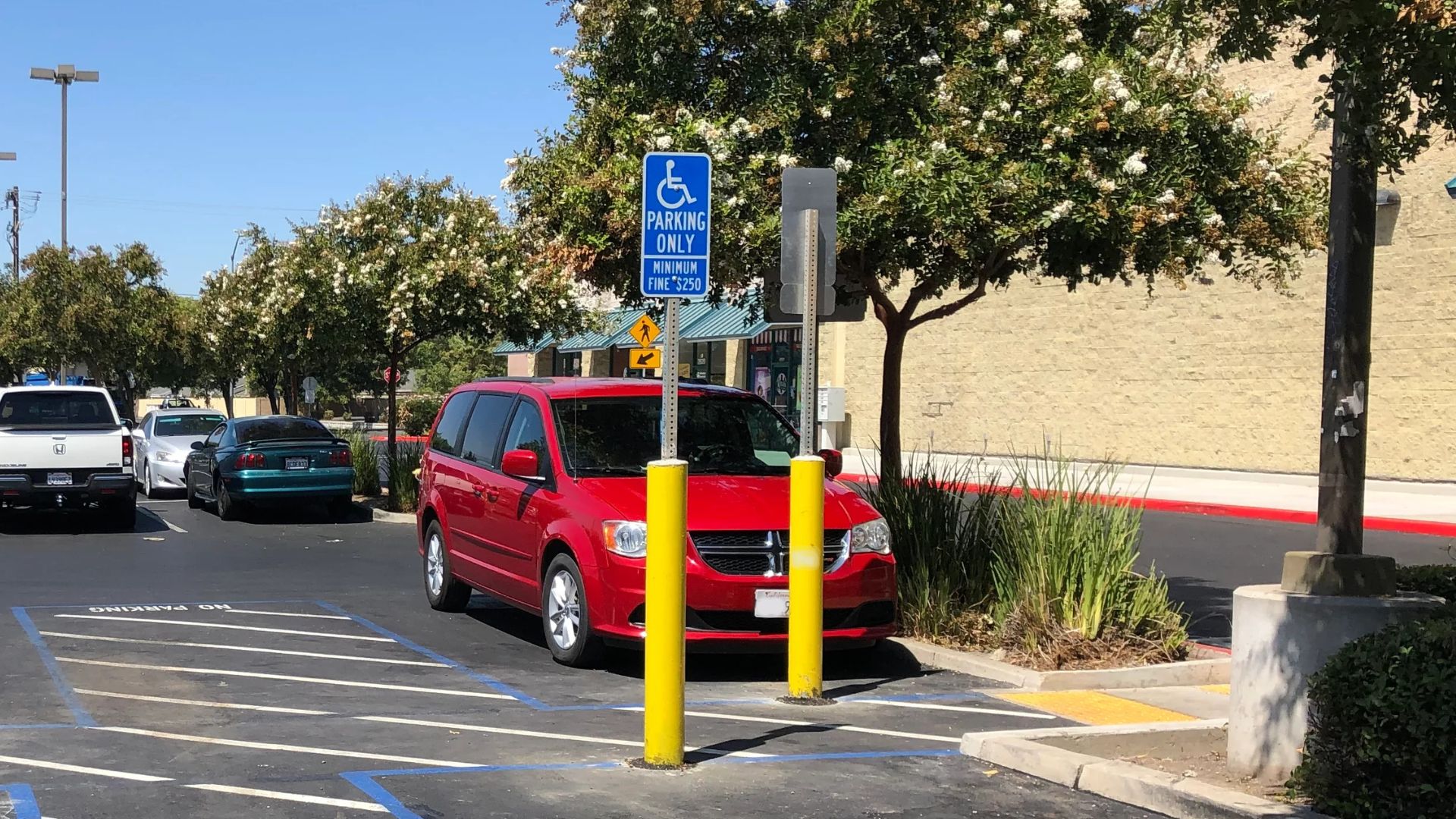
Placement also matters near accessible parking and pedestrian routes. California's accessible parking guidance says bollards may protect a post-mounted sign but can't intrude into the required parking space, access aisle, or accessible route. Coordinate the layout with any needed ADA accessibility upgrades and parking lot striping and signage.
Can Bollards Be Installed in an Existing Parking Lot?
Yes. Bollards are regularly added to existing asphalt and concrete parking areas. The contractor may saw-cut or core-drill the surface, excavate for the footing, place the bollard and concrete, then restore the surrounding pavement.
Surface condition, underground utilities, drainage, and the protection goal influence the method and price.
We’ll do a thorough site assessment so you know exactly what’s needed for your property.
What Should a Commercial Bollard Quote Include?
Ask each contractor to identify:
- The number, type, size, finish, and intended use of the bollards
- Whether the bollards and sleeves or covers are included
- The mounting method and footing dimensions
- Concrete, reinforcement, anchors, and fill
- Saw cutting, demolition, excavation, and haul-off
- Asphalt or concrete restoration
- Utility locating and responsibility for private utilities
- Permits, engineering, traffic control, and phasing
- Work hours, schedule, cure time, and reopening requirements
- Assumptions, exclusions, warranty information, and change-order conditions
This makes the bids easier to compare and helps prevent the lowest initial number from becoming the highest final cost.
How to Get a More Accurate Bollard Installation Budget
You can help a contractor narrow the range before the site visit. Provide:
- The property address
- Current photos and, if possible, a marked aerial image or site plan
- What needs to be protected and why
- The approximate number and preferred locations of the bollards
- The existing surface type
- Known utility information
- Operating hours and access restrictions
- Related pavement, concrete, striping, or accessibility work
If bollards are one part of a larger parking lot project, use this Northern California parking lot paving guide to help define the broader scope.
Plan Your Northern California Bollard Installation
A useful budget starts with a realistic range. A reliable quote starts with the site.
A1 Advantage Asphalt and Concrete installs bollards for commercial, industrial, municipal, HOA, and multi-tenant properties across Northern California. The team can evaluate placement and the surrounding asphalt, concrete, accessibility, striping, and site logistics involved.
Request a site assessment and project-specific quote for your property.
Bollard Installation Cost FAQs
How much does it cost to install a bollard in Northern California?
For early 2026 planning, allow roughly $1,000 to $2,500 per installed standard embedded, non-crash-rated commercial bollard. Simple surface-mounted bollards may cost less, while difficult sites, small quantities, extensive restoration, or engineered security systems can cost substantially more. This is a general market range, not a quote from A1 Advantage Asphalt and Concrete.
Is bollard installation priced per bollard or per project?
Contractors may present a per-bollard price, a project total, or both. Even when the proposal uses unit pricing, mobilization, equipment, permits, traffic control, and restoration affect the total. Confirm exactly what the unit price includes before comparing bids.
Does installing multiple bollards reduce the cost per bollard?
It often can. A larger group of identical bollards lets the contractor spread mobilization and equipment costs across more units. Savings depend on consistent specifications, straightforward access, and similar site conditions; a larger quantity won't offset unusually complex footings or utility conflicts.
Can bollards be installed in existing asphalt or concrete?
Yes. Existing asphalt can be cut and excavated for a footing, while concrete may be core-drilled, saw-cut, or partially removed depending on the bollard and slab. The surrounding area is then restored. The right method depends on surface condition, foundation needs, and the intended level of protection.
Do you need a permit to install bollards in California?
Possibly. Requirements vary by jurisdiction, property, placement, and bollard type. Some cities require planning or building approval for permanent bollards, while others address them as part of a larger site permit. Confirm requirements with the local authority before work begins.


FOLLOW


STAY UP TO DATE
Thank you! Your submission has been received!
Oops! Something went wrong while submitting the form.
Contractor’s State License #762538 - #882596
Copyright ©2024 A-1 Advantage Asphalt. All Rights Reserved.
Website Built by RUSTY GEORGE.
Copyright ©2024 A-1 Advantage Asphalt. All Rights Reserved.
Website Built by RUSTY GEORGE.