

Northern California Parking Lot Paving: The Commercial Property Manager’s Step-by-Step Guide

Paving your commercial parking lot would be easy... if nobody used it.
But in the real world you need a proven plan that keeps tenants open and your budget predictable.
This guide walks you through the parking lot paving process in plain English, so you can make smart decisions, avoid surprises, and confidently explain the plan to stakeholders.
If you’re responsible for a live site like a retail, industrial, corporate, HOA, or municipal facility, then parking lot paving is less about asphalt and more about operations. The best projects feel boring, in a good way: clear scope, clean phasing, no drama, and a lot that’s safer and easier to use the minute it reopens.
This guide walks you through the process so you get clean, durable parking lot pavement.
What “parking lot paving” actually includes (and what it doesn’t)
Parking lot paving can mean very different scopes depending on the site’s condition, how the lot is used, and what you’re trying to achieve (safety, curb appeal, life extension, or all three). The fastest way to get good bids is to make sure everyone is pricing the same thing.
What’s usually included in commercial parking lot paving
Most commercial parking lot paving scopes include some mix of the following:
- Site walk and surface assessment (cracks, rutting, drainage, trip hazards)
- A phasing plan to keep tenants, traffic, and emergency access moving
- Mobilization, signage, and traffic control
- Surface prep (cleaning, sweeping, minor demolition)
- Base repairs where needed (soft spots, failed areas)
- Asphalt placement (overlay, mill-and-pave, or replacement depending on need)
- Parking lot striping and layout refresh
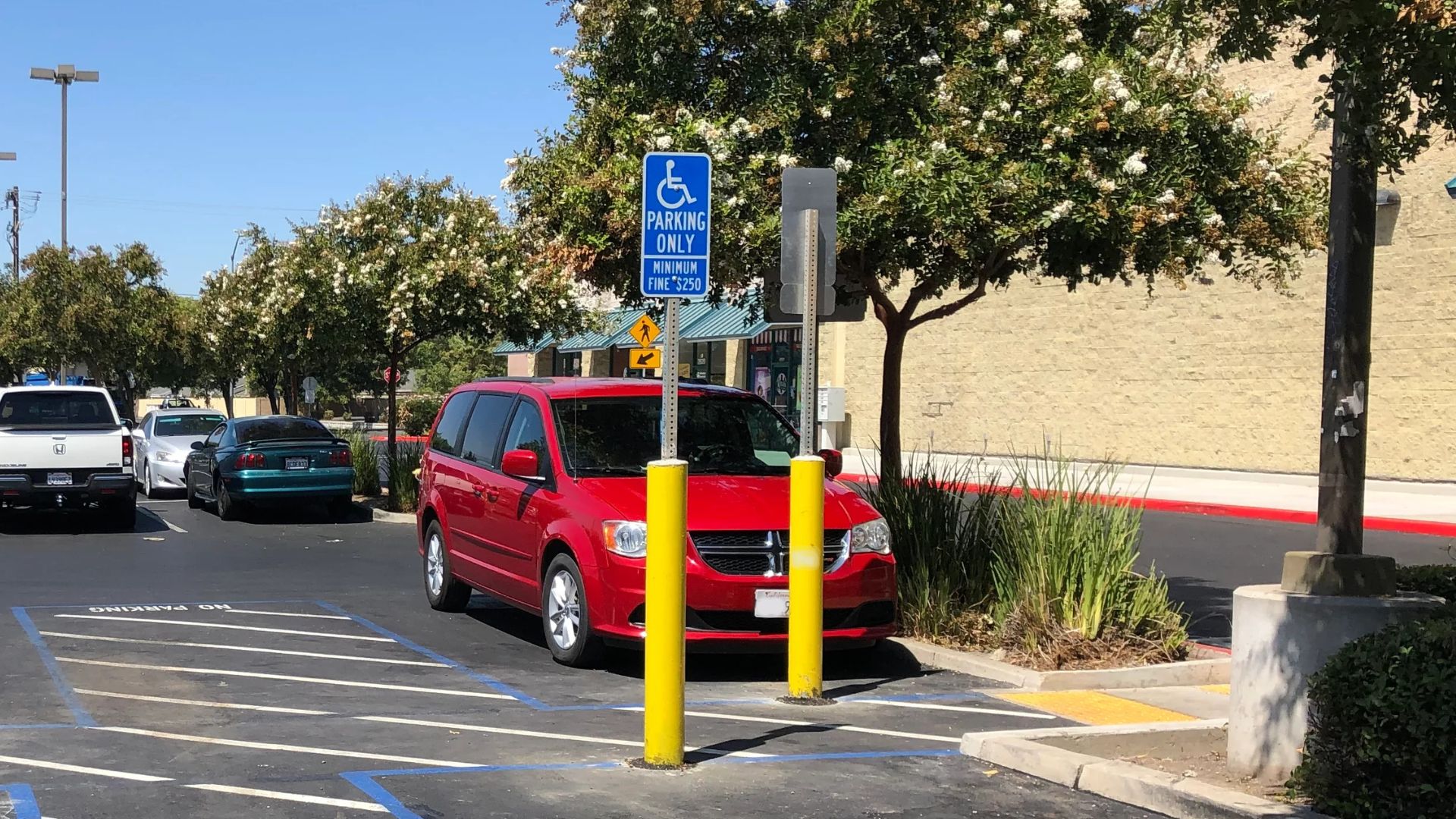
- ADA-related updates tied to striping, signage, and accessible routes
- Final walkthrough and punch list
That may sound like a lot, but it’s exactly why “parking lot paving” succeeds or fails at the planning stage. When these pieces are baked into the scope up front, the project runs smoother and the finished lot performs better.
If you're building a brand new parking lot, access road, or other paved surface, see our page for new pavement construction.
What “parking lot paving” often does not include (unless specified)
Depending on the contractor and the bid package, these items might be separate or optional:
- Major grading redesign or civil engineering changes
- Storm drain redesign, trench drains, or underground utility work
- New lighting, electrical, or irrigation modifications
- Significant concrete replacement beyond targeted areas
- Landscaping, curb reconfiguration, or site re-striping tied to re-entitlement
None of this is “bad news.” It just needs to be clearly called out so you’re not comparing apples to oranges. A clean scope is how you protect both your budget and your schedule.
The 7-step parking lot paving process
A solid parking lot paving process feels like a checklist: straightforward, repeatable, and easy to communicate. When you know the steps, it’s much easier to spot risk early and keep the project from drifting.
1) Define the goal and the constraints
Before anyone talks tonnage, get clear on what “done” looks like and what can’t be disrupted—peak shopping hours, shift changes, delivery routes, fire lanes, or ADA access. This is where you prevent the classic mistake of designing a paving plan that works on paper but falls apart in real life.
2) Assess the surface and identify failure patterns
A good contractor won’t just look at cracks—they’ll look at why the cracks are there. Alligator cracking, rutting, and ponding water point to different underlying problems, and each one calls for a different fix.
This is the moment where you decide whether you’re preserving a good lot—or trying to rescue a failing one.
3) Choose the right approach: overlay, milling and paving, or replacement
This is the strategic fork in the road. Overlay is faster and cheaper when the structure below is sound; milling and paving corrects surface issues more reliably; full replacement is for deeper failures.
If your contractor can explain the “why” in two minutes, you’re in good hands.
4) Build a phasing plan that protects uptime
Phasing is where commercial parking lot paving becomes an operations plan. The best phasing keeps entrances open, maintains safe pedestrian routes, and avoids trapping cars behind fresh asphalt.
A well-drawn phasing plan can reduce complaints more than any email ever will.
5) Prep and repair the base where it matters
The base is the quiet hero of asphalt parking lot paving. If the base is weak, the prettiest new asphalt in the world will fail early—and it usually fails in the same few high-stress areas: turns, entrances, dumpster pads, and loading zones.
Targeted base repairs are often the difference between “looks great for six months” and “performs for years.”
6) Place asphalt and handle transitions cleanly
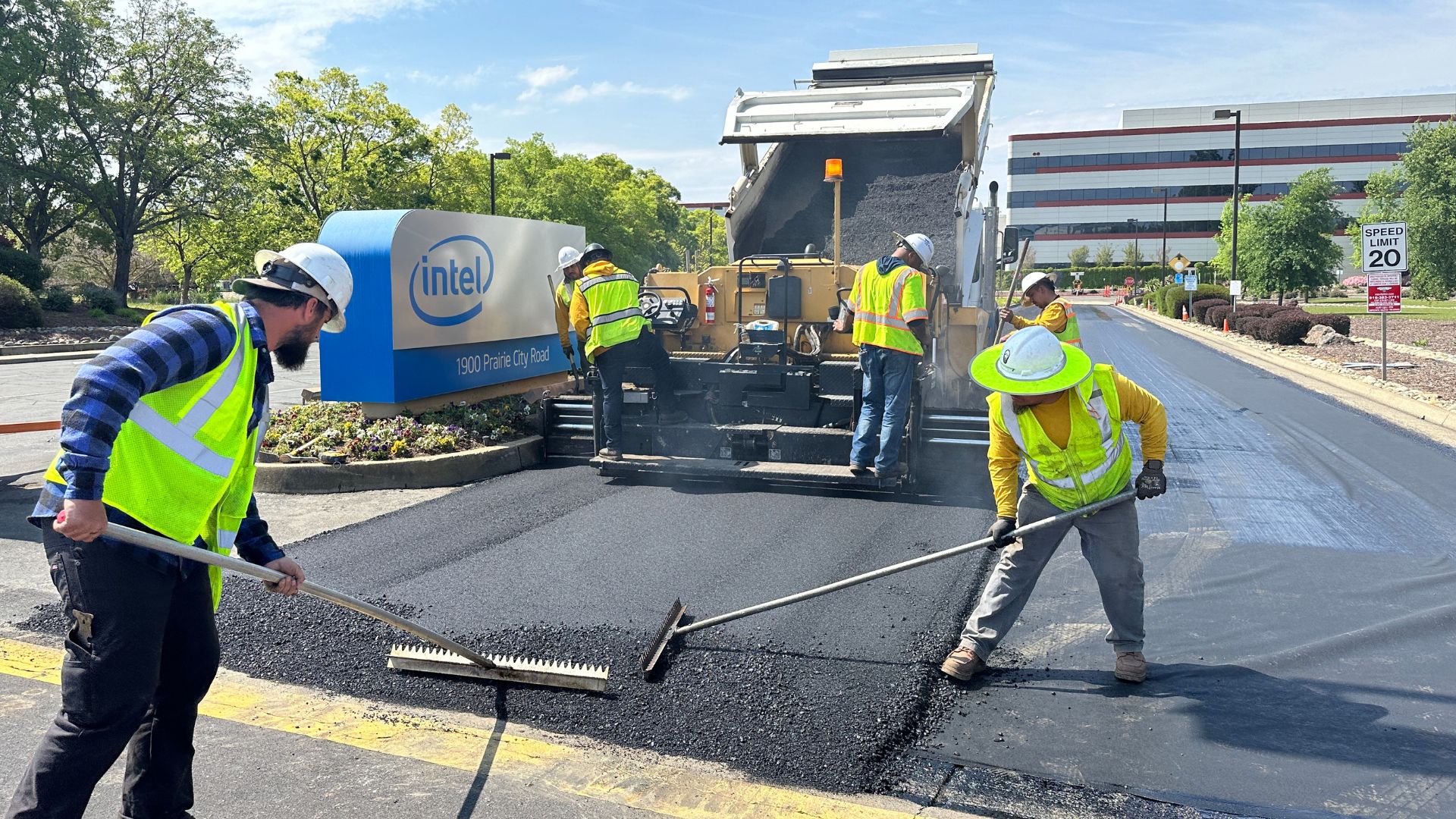
When paving day arrives, your focus shifts to sequencing, access control, and clean transitions at concrete, drains, and entries. Good crews manage joints and tie-ins so you don’t end up with lips that become trip hazards or forklift headaches.
The goal is a surface that’s not only smooth today—but stable under traffic tomorrow.
7) Finish strong: striping, signage, and final walkthrough
Parking lot striping is not a “nice-to-have.” It’s how the lot actually functions—traffic flow, ADA stalls, fire lanes, loading zones, and pedestrian routes.
A final walkthrough closes the loop: confirm the layout, address punch list items, and make sure the lot opens the way your tenants expect it to.
Mill-and-Pave vs. Overlay vs. Full Replacement
Most people don’t need more options—they need the right option.
A clear, high-level understanding of these three approaches will help you choose what fits your lot and get parking lot pavement you can rely on.
Overlay (resurfacing)
An overlay adds a new layer of asphalt over the existing surface. It’s often a strong choice when the lot’s structure is fundamentally sound and you’re dealing with surface wear, minor cracking, and aesthetics.
Overlay works best when you’re not patching over deeper failure. If the base is compromised, the problems usually come right back through the new layer.
Milling and paving (mill-and-pave)
Milling and paving removes a portion of the existing asphalt before placing new asphalt. It’s a more controlled way to correct surface issues, manage elevations near curbs and drains, and improve ride quality without fully rebuilding the lot.
If you’ve got chronic ponding, uneven transitions, or layers of past repairs, milling and paving often produces the cleanest, most predictable result.
Full replacement (reconstruction)
Full replacement removes failed asphalt and addresses deeper structural issues—often including base repairs—before new asphalt is placed. It’s the right call when the lot is showing widespread alligator cracking, deep rutting, repeated failures in the same areas, or major drainage and subgrade problems.
It’s a bigger scope, but it’s also the path that stops the cycle of “patch, patch, patch” when patching is no longer honest.
If you’re unsure which bucket your lot belongs in, the tell is simple: if failures are localized, you can usually be surgical; if failures are systemic, you need a structural plan.
How long does parking lot paving take?
Timeline anxiety is real—because downtime costs money and complaints. The good news is that most commercial paving projects can be staged to keep your property functioning while work progresses.
Short answer: Many commercial parking lot paving projects are completed in phases over a few nights or a long weekend, with striping finished shortly after paving once conditions allow. The true timeline depends on size, access constraints, the amount of base repair required, and whether you’re doing overlay vs milling and paving vs full replacement.
What drives the timeline (the stuff that actually changes your schedule)
- Scope choice: overlay is typically faster than full reconstruction
- Base repairs: the more structural work, the more time you need
- Weather and cure windows: especially for coatings and striping
- Site complexity: multiple entrances, shared lots, tight drive lanes, or high pedestrian traffic
- Operating hours: night/weekend work can compress calendar days, but requires tighter coordination
A good contractor will walk you through “calendar time” versus “closure time.” Your stakeholders care about closures; your contractor cares about sequencing. The best plans respect both.
ADA & striping: what gets missed most often
ADA parking lot requirements aren’t just a compliance checkbox—they’re a daily safety and liability issue on active properties. The mistakes that cause headaches are usually the simple ones: layout drift, missing signage, and accessible routes that don’t actually function as routes.
The win here is clarity: treat ADA and striping as part of the paving plan, not an afterthought at the end.
Common miss #1: “We restriped” but the accessible route doesn’t work
It’s easy to paint compliant stalls and still create an unusable path if the route to the entrance is broken by curbs, uneven transitions, or missing ramps. During paving, you also need to maintain temporary accessible routes so people aren’t forced into drive lanes.
If you’re planning the job well, you’re thinking about ADA access both during construction and after reopening.
Common miss #2: Layout changes over time, but the lot never gets recalibrated
Tenants change. Loading zones move. Cart corrals appear. Someone adds “temporary” bollards that become permanent. Over time, the lot stops matching the intent of the original design.
When you’re already investing in paving, it’s the perfect moment to reset the layout so traffic flow and safety match how the property operates today.
Common miss #3: Signs and markings don’t match the striping
Parking lot striping without the right signs is like installing door hardware without the keys. Accessible stall signs, van signage, fire lane markings, and directional arrows need to be consistent and placed where drivers actually see them.
The easiest way to avoid rework is to treat striping and signage as one coordinated scope.
Common miss #4: Transitions become trip hazards
Fresh asphalt meeting older concrete can create lips at ramps, sidewalks, and landings if elevations aren’t managed carefully. Those little “notches” become big problems when thousands of people walk the property every week.
Clean transitions are a quality marker—and they’re one of the first things inspectors and pedestrians notice.
Quick note: ADA details are site-specific and code-driven, so the right move is always to align your plan with current requirements and your jurisdiction. A-1 Advantage can help you translate those requirements into a practical, buildable scope that fits your property.
How to phase work so businesses stay open
Phasing is where you earn trust with tenants and stakeholders. When phasing is done well, customers barely notice the work beyond a few cones and fresh striping.
The goal isn’t “finish fast at all costs.” The goal is “finish efficiently while the property continues to function.”
Phasing pattern #1: Quadrants (great for retail and office)
Divide the lot into sections and complete one at a time, keeping a predictable share of parking open throughout. This works especially well when you can maintain a consistent entry/exit route and keep pedestrian paths clear.
Residents and tenants don’t need perfection—they need predictability. Quadrant phasing gives them that.
Phasing pattern #2: Drive lanes first (great for busy circulation)
Open the arteries first—main drive lanes, entrances, and safe pedestrian routes—then complete stall fields in smaller chunks. This keeps the property usable even while work continues.
It’s a strong approach when circulation matters more than total stall count for a day or two.
Phasing pattern #3: Night and weekend work (great for high-traffic sites)
For grocery, big-box, and high-turnover properties, night work can dramatically reduce disruption. Milling and paving can happen overnight, with areas reopening before peak hours.
Night work isn’t “magic,” but it’s a powerful lever when the schedule is tight and the property can’t afford daytime closures.
Communication that prevents 80% of the complaints
- Post clear entry signage showing what’s closed today (not just “project happening”)
- Provide a simple map for tenants and staff
- Use consistent language: “Closed at __, open at __”
- Make ADA routes obvious during construction, not just after
You don’t need a perfect communication campaign—just clear, repeated guidance that helps people make good choices in the moment.
When concrete is the better call (and why it matters that one contractor can do both)
Asphalt is fantastic for many commercial lots, but concrete earns its keep in high-stress areas. When you place concrete strategically—ramps, aprons, dumpster pads—you often get longer life and fewer recurring repairs.
The real advantage is not choosing asphalt or concrete. It’s knowing where each one wins.
Concrete is often the better call for ramps, aprons, and dumpster pads
- Ramps and landings: where clean transitions and tight tolerances matter
- Loading and dock aprons: where heavy trucks brake, turn, and pivot
- Dumpster pads: where static loads and scraping destroy asphalt
- High-turning radii: where rutting and shoving appear first
Using concrete in these zones can reduce “repeat repair” areas that soak up budget year after year.
The hidden value of a mixed-material crew
When one contractor self-performs both asphalt and concrete, you avoid the classic coordination gap: one trade blames the other for elevation issues, transitions, and schedule conflicts. With a single accountable team, the phasing plan is cleaner, the tie-ins are better, and the project manager can solve problems without waiting on another vendor.
For commercial properties, that “one throat to choke” accountability is often what keeps the project on schedule.
Ready for a parking lot pavement upgrade that keeps tenants open and your budget predictable?
Commercial parking lot paving goes best when it’s treated like an operations project, not just a construction task. A clear scope, a smart phasing plan, and coordinated ADA & striping details will do more for your outcome than any last-minute heroics on paving day.
If you want a simple next step, start here: Request a phasing plan & budget ROM for your property. A-1 Advantage will walk the site, recommend the right approach (overlay vs milling and paving vs replacement), and build a practical plan that keeps your lot functional while the work gets done.


FOLLOW


STAY UP TO DATE
Thank you! Your submission has been received!
Oops! Something went wrong while submitting the form.
Contractor’s State License #762538 - #882596
Copyright ©2024 A-1 Advantage Asphalt. All Rights Reserved.
Website Built by RUSTY GEORGE.
Copyright ©2024 A-1 Advantage Asphalt. All Rights Reserved.
Website Built by RUSTY GEORGE.