

Commercial Parking Lot Paving Standards in California: ADA, Drainage, Asphalt Specs, and More

You don’t have to be a paving engineer to manage a parking lot project well.
But before you approve the work, you do need to know which standards could affect the scope, especially things like ADA access, drainage, asphalt thickness, fire lanes, striping, stormwater, and local requirements.
Getting those details right prevents rework, compliance headaches, or pavement that fails too soon.
A-1 Advantage has helped hundreds of Northern California businesses nail the necessary standards across accessibility, paving specs, and local requirements. This guide breaks down the most important commercial parking lot paving standards for property managers in the Bay Area, the Central Valley, and beyond.
It’s not a full technical manual. Instead it’s designed to help you compare bids more clearly, ask better questions, and feel confident approving a scope that fits your property.
Note: This article is not legal advice. It’s a general educational guide to help point you in the right direction. For tailored recommendations for your lot, get in touch and we’ll send one of our experts to help.
Quick Answer: What Standards Apply to Commercial Parking Lot Paving in California?
Commercial parking lot paving in California isn’t governed by one simple statewide standard.
The right requirements depend on the property, the project scope, the local jurisdiction, and how the lot is actually used.
In most cases, the standards and requirements that may shape the project come from places like Federal ADA requirements, California Building Code accessibility provisions, local city, county, and fire department regulations, and industry best practices.
At a practical level, property managers should pay close attention to:
- ADA-accessible parking spaces, access aisles, signs, slopes, and routes
- Drainage and surface slope
- Asphalt thickness, aggregate base, and subgrade preparation
- Heavy-use areas like loading zones, trash truck routes, delivery lanes, and fire lanes
- Striping, signage, crosswalks, arrows, and curb markings
- Fire department access and no-parking zones
- Stormwater or runoff requirements for larger projects
- Clear bid language around what’s included and excluded
But not every project involves every standard.
A retail center in San Jose, an industrial yard in Sacramento, a medical office in Santa Rosa, and an HOA community in the East Bay will all need different planning.
But that doesn’t mean the process has to be overwhelming. A good paving contractor will explain what they’re proposing and what needs to be confirmed with the right authority, engineer, designer, or accessibility professional.
For a broader step-by-step look at planning, phasing, and executing the work, see our guide to the commercial parking lot paving process.
ADA Parking Requirements Are Often the First Standard to Review
Accessibility is one of the most important standards to consider before paving, resurfacing, or restriping a commercial parking lot. Small layout or slope issues can create bigger problems if they’re missed until the end of the project.
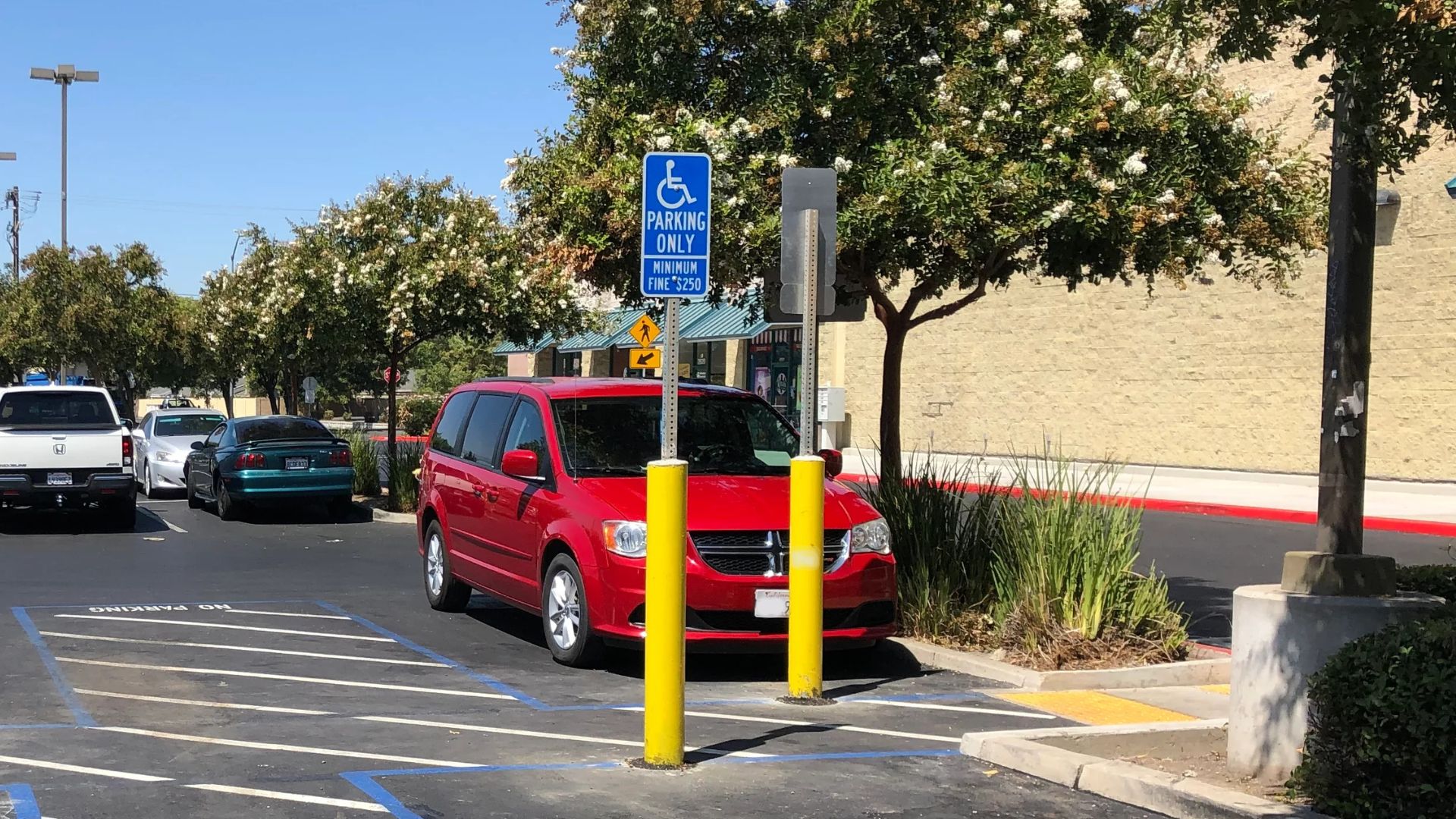
Accessible parking involves more than paint. The surface, slope, access aisle, signage, curb ramps, accessible route, and connection to the building all work together.
Under federal ADA guidance, car-accessible parking spaces must be at least 96 inches wide, have an access aisle at least 60 inches wide, have a firm, stable, slip-resistant surface, and have no more than a 1:48 slope, or 2.08%, in all directions. Van-accessible spaces have additional requirements, including vertical clearance and either a wider space or wider access aisle.
ADA restriping guidance also notes that access aisles need to be at the same level and the same length as the adjacent space they serve, connect to an accessible route, and stay clear of curb ramps.
For property managers, the practical takeaway is simple: don’t wait until the striping crew arrives to think about ADA access.
If your paving project affects curb ramps, accessible routes, or building entrances, it may also be worth reviewing whether the property needs ADA retrofit, ramps, and handrails as part of the broader scope.
Before paving or restriping, review:
- Number and location of accessible spaces
- Car-accessible and van-accessible space requirements
- Access aisle width and markings
- Slope in accessible spaces and aisles
- Accessible route to the building entrance
- Curb ramps and transitions
- Signage height and placement
- Whether parked vehicles could block accessible routes
You may also need to account for state-specific accessibility provisions, not only federal ADA guidance. California’s Division of the State Architect maintains access compliance materials, including California Building Code accessibility provisions.
If you’re not sure how to navigate ADA and accessibility requirements for your property, A-1 Advantage has decades of accessibility expertise to make sure your parking lot is fully compliant. Request an assessment today and we’ll help you make a solid plan.
Asphalt Specs: Thickness Depends on Use, Base, and Traffic
One of the first questions property managers ask is usually: “How thick should the asphalt be?”
The honest answer is that it depends on how the lot is built and how it’s used.
A standard passenger parking area, a delivery lane, and a dumpster approach don’t take the same abuse. Soil conditions, drainage, existing base, traffic volume, vehicle weight, and the type of paving work all matter.
A basic pavement section usually includes:
- Subgrade: the prepared soil beneath the pavement
- Aggregate base: compacted rock or base material that helps distribute loads
- Asphalt concrete: the paved asphalt layers above the base
- Surface course: the top asphalt layer people drive and park on
For general planning, many commercial asphalt designs fall into rough ranges like these:
- Light-duty passenger parking: often around 3 to 4 inches of asphalt over a compacted aggregate base
- Moderate commercial traffic: often around 4 to 5.5 inches of asphalt, depending on base and traffic
- Heavy-use areas: loading zones, trash truck routes, delivery lanes, and industrial areas may require heavier sections, sometimes 5.5 to 7 inches or more depending on design
- Aggregate base: often around 6 to 12 inches depending on soil, traffic, and design needs
Those are planning ranges, not universal specifications. The final scope should reflect the site conditions, intended use, and any project-specific requirements.
For full reconstruction or new pavement sections, the scope may fall under new pavement construction, where base preparation, asphalt section, and long-term durability become especially important.
For a property manager, the point isn’t to memorize asphalt specs. It’s to make sure the bid clearly explains what’s being proposed.
A good bid should answer:
- Is this an overlay, mill-and-pave, full-depth repair, or reconstruction?
- How thick is the asphalt being placed?
- Is the asphalt being placed in one lift or multiple lifts?
- Is aggregate base included?
- Are heavy-use areas being treated differently?
- Are failed areas being repaired before new asphalt goes down?
That last question matters. It may be smarter to strengthen the areas where trucks turn, brake, stop, or load rather than overbuilding the entire lot.
A-1 Advantage gives you expert pavement design tailored to your lot, so you can rest easy that each section will perform for the long run without being overbuilt.
Overlay, Mill-and-Pave, and Full-Depth Repair Mean Different Things
A lot of paving confusion starts when bids use different methods but sound similar at first glance. Before comparing prices, make sure you understand which type of work each contractor is proposing.
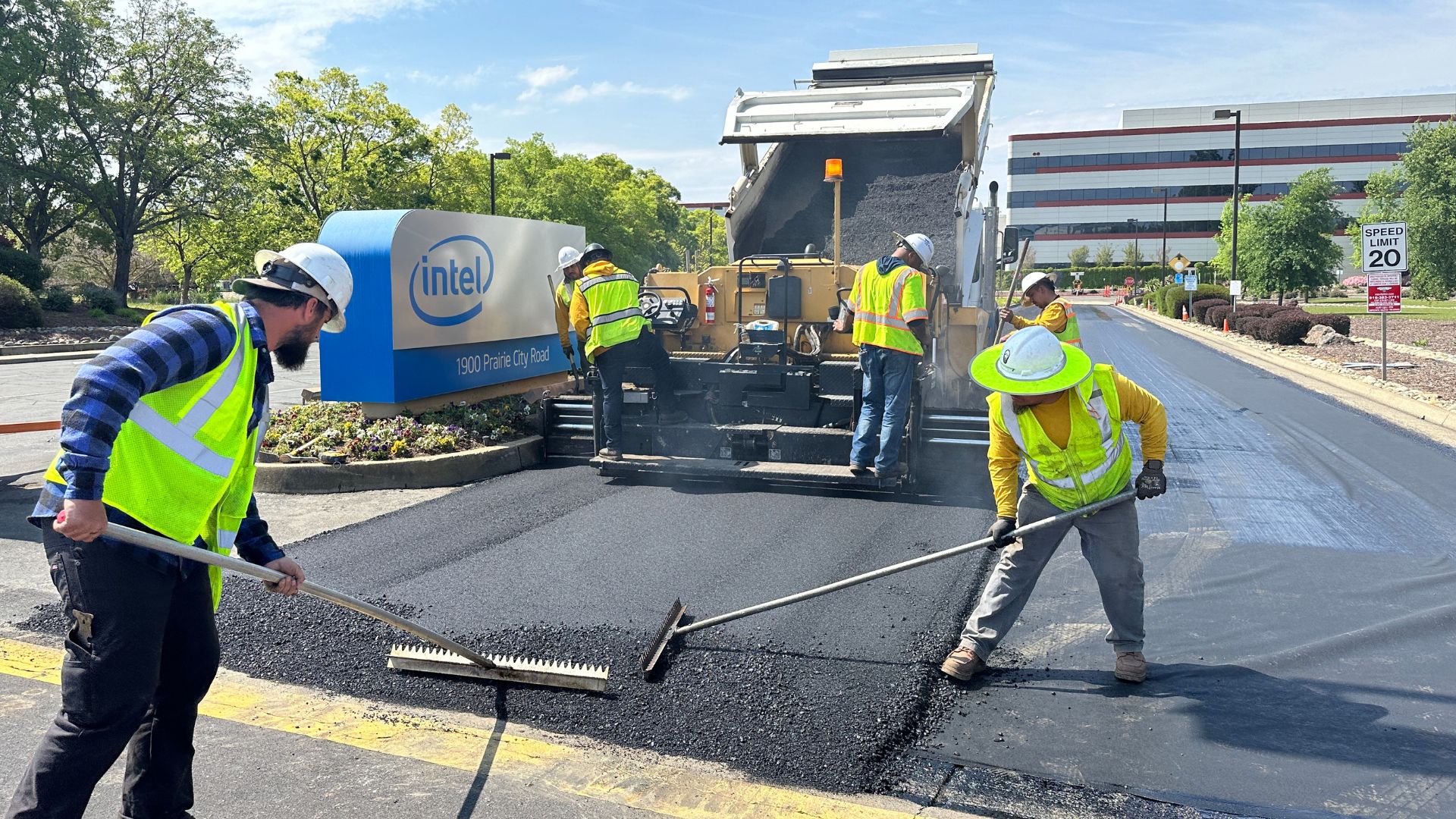
An overlay adds new asphalt over the existing pavement. It can be a good option when the underlying pavement is stable enough to support the new surface.
A mill-and-pave removes part of the existing asphalt before new asphalt is placed. This approach is often useful where elevations matter, such as near curbs, drains, sidewalks, ADA areas, building entrances, and concrete tie-ins.
A full-depth repair removes failed pavement down to the problem area, then rebuilds that section before paving. This is often needed where the base or subgrade is failing.
The main risk is paying for a new surface over a deeper problem. If a lot has soft spots, alligator cracking, rutting, repeated potholes, or water-damaged areas, an overlay may make the lot look better for a while without correcting the cause of the failure.
The type of asphalt repair and maintenance you need depends on the condition of your lot now, on the surface and below..
Ask the contractor to explain why the recommended method fits the pavement condition. A clear answer can save you from approving a scope that’s too light for the problems underneath.
Drainage and Slope Standards Matter More Than Most People Realize
Drainage has a huge impact on how long asphalt lasts. When water sits on the surface or gets into cracks and base layers, the pavement can start breaking down faster.
The Asphalt Institute recommends maintaining at least a 1.5% slope on parking lots to support proper surface drainage and reduce ponding. Other asphalt industry guidance commonly recommends designing parking lots around a minimum 2% slope where possible because very flat areas can be harder to build without shallow pooling.
There’s an important accessibility issue here too. ADA guidance limits accessible parking spaces and access aisles to a maximum 1:48 slope, or 2.08%, in all directions.
So accessible parking areas need enough slope to drain, while still staying within accessibility limits. That’s one reason ADA layout and grading should be reviewed before paving starts.
Property managers should flag:
- Standing water after storms
- Low spots near drain inlets
- Water running toward buildings
- Potholes in wet areas
- Cracking around drains
- Edge erosion
- Settlement near curbs
- Areas that stay damp longer than the rest of the lot
Fresh asphalt won’t automatically fix drainage. If the grade is wrong, the drain is too high, or the base has settled, those issues need to be reviewed as part of the scope.
A-1 Advantage provides a full suite of site development services to make sure your grading and drainage are tailored to your property’s needs.
Stormwater Requirements May Apply on Larger Projects
For routine maintenance, stormwater may only be a basic planning consideration. For larger reconstruction, expansion, redevelopment, or drainage-related projects, local stormwater requirements may come into play.
Parking lots are impervious surfaces. When rainwater runs across pavement, it can pick up oil, sediment, trash, chemicals, and other pollutants before reaching storm drains or waterways.
Property managers don’t need to become stormwater experts. But it’s worth asking whether the project changes drainage patterns, replaces or expands impervious surface, disturbs soil, or triggers local stormwater requirements.
Good questions include:
- Does this project require local stormwater review?
- Are we changing where runoff goes?
- Are drain inlets, catch basins, or low spots being modified?
- Will construction disturb enough soil to trigger additional requirements?
- Are there local post-construction stormwater controls we need to account for?
This is especially important for larger commercial, industrial, municipal, or redevelopment projects. When in doubt, confirm the requirements early so stormwater doesn’t become a late-stage surprise.
Striping and Signage Should Be Planned Before Paving Is Finished
Striping shapes how the parking lot works every day. It guides drivers, organizes parking, supports ADA access, marks fire lanes, and helps pedestrians move through the property more safely.
Depending on the property, the striping and signage plan may include:
- Standard parking stalls
- ADA spaces and access aisles
- Directional arrows
- Stop bars
- Crosswalks
- Fire lanes
- Loading zones
- No-parking areas
- Curb paint
- Pedestrian routes
- Traffic signs
Traffic marking standards may apply depending on the roadway, property type, and local jurisdiction. Site roadways open to public travel, fire lanes, and ADA-related markings may have requirements that need to be followed or confirmed.
For property managers, the safest move is to review the parking lot striping and signage plan before paving is complete.
That’s the right time to ask:
- Are the ADA stalls and access aisles correct?
- Are fire lanes marked correctly?
- Are crosswalks in the safest locations?
- Are loading zones clear?
- Do arrows and stop bars match the intended traffic flow?
- Are signs included or separate?
- Are any local standards or fire authority requirements involved?
If the existing layout is confusing, resurfacing may be a good chance to improve it. Repainting the same layout can also repaint the same problems.
Fire Lane and Emergency Access Requirements Should Be Checked Early
Commercial parking lots often need to preserve fire department access, emergency routes, and no-parking zones. These requirements are usually driven by the local fire authority.
As a common baseline, fire apparatus access roads often need at least 20 feet of unobstructed width and 13 feet 6 inches of vertical clearance. Local requirements may vary based on building type, aerial access needs, parking configuration, dead-end length, gates, turning radius, and fire official review.
Property managers should confirm:
- Fire lane locations
- No-parking zones
- Required access width
- Vertical clearance
- Turning areas
- Gate or entry requirements
- Whether speed bumps or traffic calming features are allowed
- Required signs or curb markings
Confirm these details before changing parking layouts, islands, bollards, speed bumps, striping, or curb markings. Fire access issues can create expensive rework if they’re discovered after the lot has already been paved and striped.
FAQ
What are commercial parking lot paving standards in California?
Commercial parking lot paving standards in California may include ADA requirements, California accessibility provisions, local city or county standards, fire access requirements, drainage and stormwater rules, asphalt construction specifications, striping requirements, and project-specific bid documents.
There isn’t one universal standard that applies the same way to every commercial parking lot. The right scope depends on the property, local requirements, site conditions, and how the lot is used.
Does every commercial parking lot need to meet ADA requirements?
Commercial facilities and public accommodations may need to meet applicable accessibility requirements. Paving, resurfacing, and restriping are common times to review accessible parking spaces, access aisles, slopes, signage, curb ramps, and accessible routes.
Property managers should confirm requirements with qualified professionals and the local jurisdiction before changing parking layouts or accessible features.
How thick should asphalt be for a commercial parking lot?
It depends on the property. Passenger-car parking areas, drive aisles, loading zones, dumpster routes, fire lanes, and industrial areas may all need different pavement sections.
As a broad planning range, light-duty parking areas may use around 3 to 4 inches of asphalt over a compacted base, while heavier commercial or truck areas may require thicker asphalt, stronger base, or engineered pavement sections. Final specifications should be based on site conditions and project requirements.
What slope should a parking lot have for drainage?
Many asphalt industry resources recommend enough slope to move water off the pavement and reduce ponding. The Asphalt Institute recommends at least 1.5% slope on parking lots for proper surface drainage.
Accessible parking spaces and access aisles have a different limit. ADA guidance allows a maximum 1:48 slope, or 2.08%, in all directions for those areas.
Are fire lane requirements the same everywhere?
No. Fire lane and emergency access requirements are often determined by the local fire authority.
Many standards use baseline dimensions such as 20 feet of unobstructed width and 13 feet 6 inches of vertical clearance for fire apparatus access roads, but local requirements may vary. Property managers should confirm fire access requirements before changing layout, striping, curbs, parking areas, gates, bollards, or speed bumps.
What should be included in a commercial paving bid?
A commercial paving bid should clarify the project limits, repair method, asphalt and base scope, drainage corrections, ADA-related work, striping, signage, fire access considerations, phasing, exclusions, and any project-specific requirements.
The clearer the scope, the easier it is to compare bids fairly.
Standards Help You Approve the Right Scope
Commercial parking lot paving standards can feel technical at first, but you shouldn’t feel like you have to manage every detail.
You just need to know what to check before work begins.
That includes ADA access, drainage, asphalt section, fire lanes, striping, stormwater, local requirements, and bid scope. When those pieces are reviewed early, it’s much easier to protect your property, your budget, your tenants, and the people who use the lot every day.
If you’re planning a commercial parking lot paving project in Northern California, A-1 Advantage Asphalt will evaluate your site, clarify the right scope, and make a plan that fits your property and incorporates all the necessary standards.
Get in touch today and we’ll help you plan a cost-effective and fully compliant parking lot.


FOLLOW


STAY UP TO DATE
Thank you! Your submission has been received!
Oops! Something went wrong while submitting the form.
Contractor’s State License #762538 - #882596
Copyright ©2024 A-1 Advantage Asphalt. All Rights Reserved.
Website Built by RUSTY GEORGE.
Copyright ©2024 A-1 Advantage Asphalt. All Rights Reserved.
Website Built by RUSTY GEORGE.