

Parking Lot Repair vs Resurfacing in Northern California: Patch, Overlay, or Replace?

Your parking lot takes a lot of daily abuse, but the wear and tear can sneak up on you.
First it’s just a few small cracks or a little pothole near the back of the lot.
But then some rainwater lingers in a low spot. Customers start swerving around a rough patch. A tenant complains.
Suddenly you’re asking, “What’s it gonna take to get this lot back in shape?”
That is where a lot of property managers, HOA boards, and facility teams get stuck.
Do you patch the bad areas? Resurface the whole lot? Add an asphalt overlay? Mill and pave? Tear it out and start from scratch?
The right answer depends on what’s happening under the surface, not just what the lot looks like from a distance. This guide will help you understand the difference between parking lot repair and resurfacing, what different pavement problems usually mean, and how to choose the right level of work before you spend money on the wrong fix.
Quick Answer: Should You Repair, Resurface, or Replace Your Parking Lot?
Most parking lots don’t fail all at once. They send signals first: cracks, potholes, faded asphalt, rough texture, ponding water, or soft spots that keep coming back.
Here is a simple way to start narrowing down the right repair path:
- One or two isolated potholes ➔ a patch repair may be enough
- Open cracks but the pavement is still mostly solid ➔ the right next step may be crack sealing and sealcoating
- Faded, dry, or oxidized asphalt ➔ sealcoating may be the best preservation option
- Worn, rough, or raveling surface ➔ it may be time to look at slurry seal or a resurfacing evaluation
- Rough pavement across larger areas but the base is still stable ➔ an asphalt overlay may work
- Uneven areas, drainage issues, or elevation problems near curbs, drains, sidewalks, or entrances ➔ mill-and-pave may be needed
- Alligator cracking, soft spots, repeated potholes, or the same areas failing repeatedly ➔ the lot may need full-depth repair or replacement
This is a helpful starting point, but it is not a substitute for a pavement evaluation. The real question is whether the problem is surface-level or structural. Surface problems can often be preserved. Structural problems need deeper repair.
The Simple Difference Between Parking Lot Repair and Resurfacing
The terms can blur together, especially when several contractors use them a little differently. But the basic distinction is straightforward.
Parking lot repair usually means fixing specific damaged areas. That might include pothole patching, crack sealing, small cut-and-patch repairs, trip hazard correction, or repairing a localized failed section.
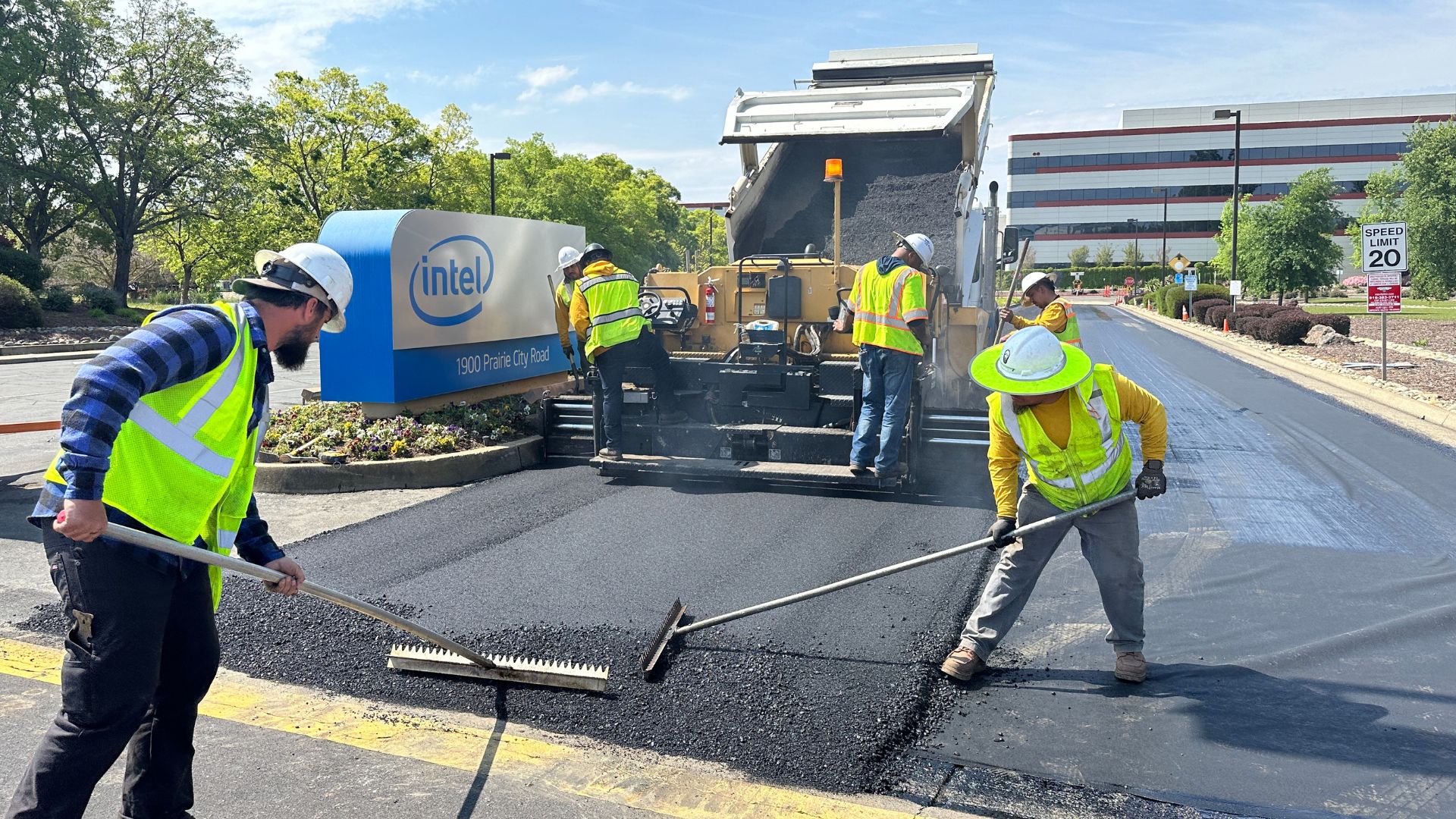
Parking lot resurfacing means renewing a larger pavement surface. That often involves placing a new layer of asphalt over the existing lot or milling away the top layer first and then paving new asphalt.
In plain English: repair fixes problem spots, resurfacing renews a larger area.
That distinction matters because the cheapest fix is not always the best value. A patch can be the right call for one isolated pothole. But if the whole lot is cracking, settling, and failing from the base up, patching may just buy a little time before the same problem returns.
See our full Northern California parking lot paving guide to understand how repair and resurfacing fit into the larger lot maintenance picture.
When a Simple Asphalt Patch Is Enough
Sometimes the right fix really is small and straightforward. Not every parking lot problem needs a major resurfacing project.
A patch may be the right solution when the damage is limited to one area and the surrounding pavement is still in decent condition.
Common examples include:
- One or two isolated potholes
- A small failed area near a drain or utility cut
- Localized trip hazards
- Damage from delivery trucks in one turning area
- A section that failed because of a specific, fixable issue
In these cases, patching can restore safety and usability without turning the whole lot into a construction project.
The key word is localized. If one spot failed because of one identifiable issue, patching can make sense. If many areas are failing for the same reason, the problem is probably bigger than the patch.
When Crack Sealing and Sealcoating Make More Sense
Some lots look worse than they really are. The asphalt may be faded, dry, and cracked, but still structurally sound.
That is where crack sealing and sealcoating can be a smart preservation move.
Crack sealing helps close open cracks so water has a harder time getting below the surface. Sealcoating protects the asphalt surface from weather, oxidation, and everyday wear while giving the lot a darker, cleaner appearance.
This approach can make sense when you see:
- Open cracks in otherwise stable pavement
- Faded or gray asphalt
- Light surface wear
- Minor oxidation
- A lot that still drains well and feels solid under traffic
See our Northern California guide to sealcoating costs to see how it can help protect your maintenance budget.
But there is a limit.
Sealcoating will not fix potholes. It will not solve alligator cracking. It will not stabilize a failing base. If the pavement is already breaking apart, sealcoating may make it look better for a short time, but it will not solve the real issue.
When Slurry Seal or Pavement Preservation Is the Better Step
Some pavement is too worn for sealcoating but not yet bad enough for resurfacing. That middle ground is where pavement preservation treatments can be useful.
Slurry seal is often considered when the surface has more wear, texture loss, or raveling than sealcoat is meant to handle, but the pavement base is still stable.
It may be a fit when you see:
- Surface raveling
- Loss of texture
- More visible wear from traffic
- A lot that still feels structurally sound
- Pavement that needs more than cosmetic protection
Think of slurry seal as a heavier preservation treatment, not a structural repair.
It can help renew the top surface and extend pavement life when the underlying asphalt is still a good candidate. But if the lot has soft spots, widespread alligator cracking, or repeated potholes, slurry seal is probably not enough.
When Your Parking Lot Needs Resurfacing
Resurfacing is the next step when spot repairs and preservation treatments are no longer enough.
This is the middle ground between patching a few problem areas and fully replacing the lot. It is often the right conversation when the damage is widespread, the surface is rough, or the pavement has aged beyond what sealcoating or slurry seal can reasonably address.
Parking lot resurfacing may make sense when you see:
- Widespread surface wear
- Rough pavement across large areas
- Multiple patched areas
- Aging asphalt that still has a stable base
- A lot that has outgrown small repairs
- Drainage or elevation issues that need more than a surface coating
There are two common resurfacing paths to understand.
Asphalt overlay
An asphalt overlay adds a new layer of asphalt over the existing pavement.
This can work when the current lot is stable enough to support the new layer. It is often less disruptive than full replacement and can be a strong option when the issue is mostly surface deterioration.
The catch is that the existing pavement still matters. If the base is failing, an overlay may only cover the problem temporarily.
Mill-and-pave
Mill-and-pave goes a step further.
The crew grinds down part of the existing asphalt surface, removes that material, and places new asphalt back at the proper elevation. This can be useful when the lot needs better transitions at curbs, sidewalks, drains, garage entries, or ADA-accessible areas.
Mill-and-pave can also help when adding a simple overlay would create height problems.
The choice between overlay and mill-and-pave usually comes down to pavement condition, elevations, drainage, and how the site needs to function when the work is done.
When Full-Depth Repair or Replacement Is the Best Investment
This is the answer nobody wants. But sometimes it’s the right one.
If the pavement is failing from the base up, surface treatments and overlays may not last. They can improve the appearance for a while, but the same cracks, potholes, and soft areas often come back.
Full-depth repair or replacement may be needed when you see:
- Alligator cracking
- Soft or pumping areas
- Repeated potholes in the same place
- Major drainage problems
- Base failure
- Large areas breaking apart
- Depressions that hold water
- Pavement movement under traffic
Alligator cracking is especially important. It usually looks like a web of connected cracks, similar to reptile skin. That pattern often points to deeper structural failure, not just surface aging.
In those cases, resurfacing over the top may be tempting because it costs less up front. But if the base is unstable, the new surface can crack again from below. That is why a good contractor will look at what is causing the failure before recommending a scope.
How to Tell If the Problem Is Surface-Level or Structural
You do not need to be a paving expert to spot the difference between “aging surface” and “deeper problem.” You just need to know what signals to look for.
Surface-level issues often include:
- Fading
- Light cracking
- Minor raveling
- Surface oxidation
- Worn striping
- A dry or gray appearance
- Pavement that still feels solid under normal traffic
These problems may be good candidates for crack sealing, sealcoating, slurry seal, or other preservation work.
Structural issues often include:
- Alligator cracking
- Depressions
- Soft spots
- Standing water
- Widespread potholes
- Edges breaking apart
- Repeated failures after past patching
These issues usually call for a deeper evaluation.
A simple rule of thumb: if the pavement is mostly intact, preservation may be enough. If it is moving, sinking, cracking in patterns, or failing in the same places again and again, the fix probably needs to go deeper.
How to Avoid Paying for the Wrong Fix
The wrong asphalt repair usually happens when the scope is chosen by price alone.
A cheap patch can be the right choice for a small, isolated problem. But it can be a waste of money if the surrounding pavement is already failing. In the same way, resurfacing may be more work than you need if the lot is still structurally sound and mainly needs preservation.
Before approving a bid, ask a few direct questions:
- What is causing the damage?
- Is the base still stable?
- Will this repair solve the problem or just cover it?
- How long should this fix last?
- Are drainage issues contributing to the damage?
- Should striping, ADA access, or concrete work be addressed at the same time?
- Can the work be phased to keep the property operating?
Good answers should be specific to your site. If every problem gets the same solution, that is a red flag.
The goal is not to buy the biggest project. It is to buy the right one.
What to Send a Contractor Before Asking for a Quote
You can make the quoting process faster and more accurate by giving the contractor a clear picture of the site before the first visit.
Send:
- The property address
- Photos of the problem areas
- An aerial screenshot or site map
- Notes on potholes, cracks, standing water, or rough areas
- Traffic type, such as cars, trucks, forklifts, buses, or delivery vehicles
- Any access or phasing requirements
- Whether striping or ADA upgrades may be needed
This helps the contractor understand both the pavement condition and the operating constraints.
A retail center may need phasing around peak customer hours. An industrial yard may need truck access maintained. An HOA may need resident communication. A municipal site may need extra planning around public access.
The better the information, the better the recommendation.
FAQ
Can you patch a parking lot instead of resurfacing it?
Yes, if the damage is isolated and the surrounding pavement is still in good condition. Patching is often a good fit for one or two potholes, small failed areas, or localized damage.
If the lot has widespread cracking, repeated failures, or structural problems, patching may only be a short-term fix.
How do I know if my asphalt damage is structural?
Alligator cracking, soft spots, depressions, repeated potholes, and standing water often point to deeper issues.
If the pavement keeps failing in the same place after repairs, that is another sign the problem may be below the surface.
Is asphalt overlay cheaper than replacement?
Usually, yes. An overlay is typically less involved than full replacement because it uses the existing pavement as a base.
But overlay only makes sense if that existing pavement is stable enough to support the new layer. If the base is failing, replacement or full-depth repair may be the better long-term investment.
What is the difference between overlay and mill-and-pave?
An overlay adds new asphalt over the existing surface.
Mill-and-pave removes part of the existing asphalt first, then replaces it with new asphalt. Milling can help with elevations, transitions, drainage, and tie-ins around curbs, sidewalks, drains, and entrances.
Will sealcoating fix cracks or potholes?
No. Sealcoating protects the surface, but cracks and potholes need to be repaired separately.
If cracks are present, they may need crack sealing before sealcoating. If potholes are present, they need patching or deeper repair.
When is full replacement necessary?
Full replacement may be needed when the pavement has widespread structural failure, base problems, major drainage issues, or repeated failures that surface treatments cannot solve.
It is often the right move when repairing the surface would only delay the same problems from coming back.
Choose the Fix That Matches the Problem
Most parking lots do not need the most expensive fix right away. But they do need the right fix for the condition they are in now.
A few isolated potholes may only need patching. A faded but stable lot may be ready for crack sealing and sealcoating. A worn surface may need slurry seal or resurfacing. A failing base may need full-depth repair or replacement.
The smartest next step is to have the pavement evaluated before you commit to a scope. That way you are not paying for a temporary patch when the lot needs structural work, or resurfacing a lot that could have been preserved with the right maintenance plan.
If you are weighing parking lot repair vs resurfacing in Northern California, A-1 Advantage Asphalt can help you understand what your pavement is telling you and choose the right path forward.
Get in touch today and we’ll help you make the most cost-effective plan for your property.


FOLLOW


STAY UP TO DATE
Thank you! Your submission has been received!
Oops! Something went wrong while submitting the form.
Contractor’s State License #762538 - #882596
Copyright ©2024 A-1 Advantage Asphalt. All Rights Reserved.
Website Built by RUSTY GEORGE.
Copyright ©2024 A-1 Advantage Asphalt. All Rights Reserved.
Website Built by RUSTY GEORGE.