

Asphalt Overlay Cost in Northern California: What Commercial Parking Lots Should Budget For
An asphalt overlay can be one of the most cost-effective ways to restore a commercial parking lot, but only when the pavement underneath is still worth saving.
In Northern California, here are some helpful starting ranges:
- Most commercial resurfacing projects budget about $4–$7 per square foot.
- Large, straightforward lots with a stable base and limited prep work may fall closer to $3–$4.50 per square foot.
- Projects with significant repairs, drainage problems, ADA or concrete upgrades, difficult access, or complex phasing can reach $7–$10+ per square foot.
These are early planning ranges to help you budget, not bids. The final cost depends on your pavement condition, repair needs, access requirements, and the related work needed to reopen the property safely.
We’ve helped dozens of companies throughout the Bay Area, Central Valley, and beyond get their pavement repaired and maintained on budget.
Here’s what you need to know to plan a cost-effective overlay.
What Is an Asphalt Overlay?
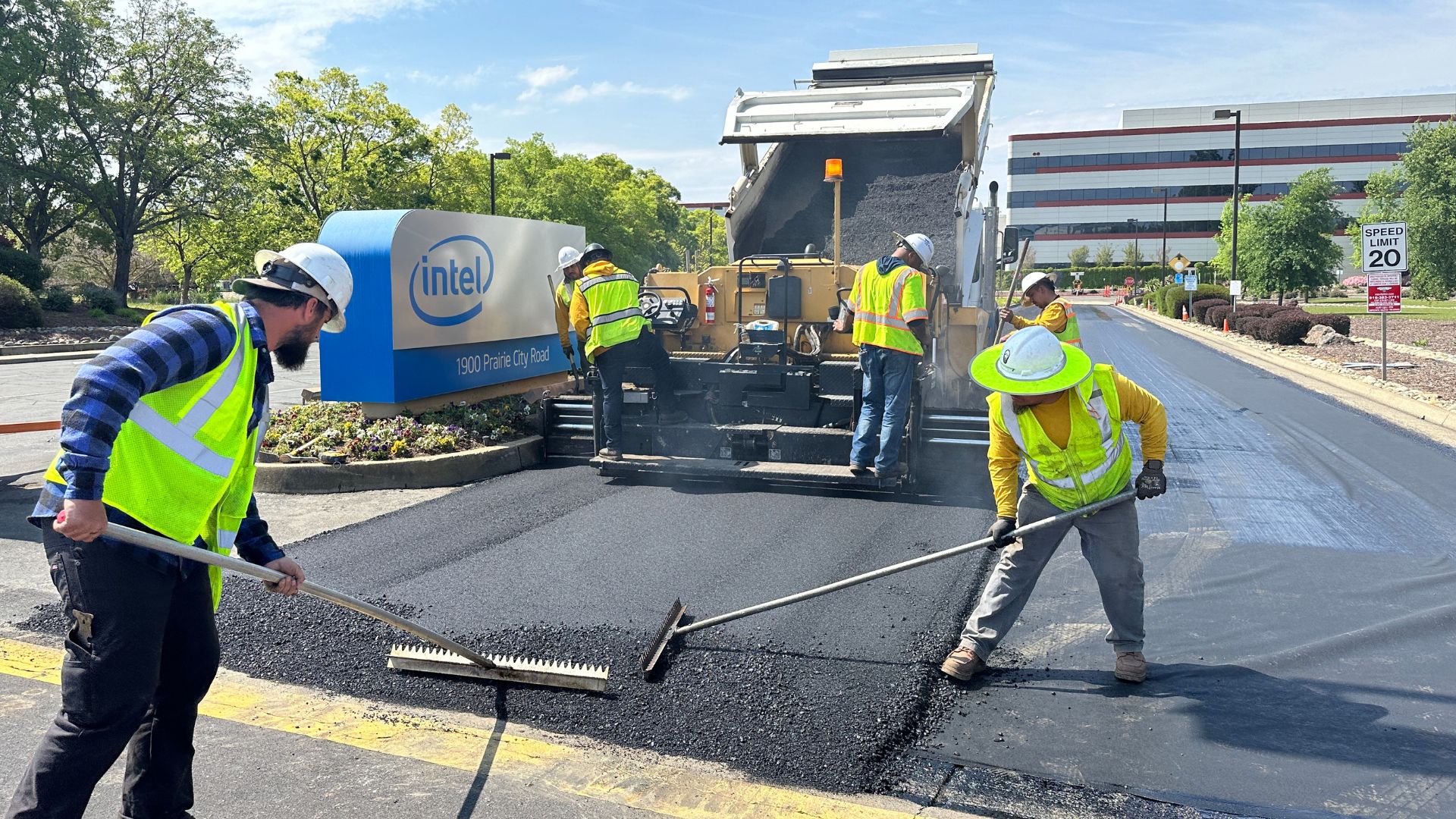
An asphalt overlay, also called resurfacing, is a new layer of asphalt installed over an existing paved surface after necessary preparation and repairs.
When the pavement base is still in good shape, an overlay can improve the look, safety, and performance of a commercial parking lot without the cost of full replacement.
It’s helpful to understand how overlay compares with other paving options:
- Asphalt overlay: New asphalt is installed over the existing surface.
- Mill and pave: A controlled depth of old asphalt is removed before new asphalt is installed.
- Full replacement: Failed asphalt and underlying base materials are removed and rebuilt.
An overlay can extend the life of sound pavement. It won’t solve widespread base failure, recurring water problems, or deep structural cracking below the surface.
What Does a Commercial Asphalt Overlay Cost?
Simple Commercial Overlay: About $3–$4.50 Per Square Foot
This lower range is generally possible on larger, accessible properties with a stable pavement base and limited repair needs.
A straightforward overlay project may include a new asphalt surface, standard preparation, and limited work at transitions. It’s most realistic when the lot has minor surface cracking, few failed areas, minimal drainage concerns, and enough room for crews and equipment to work efficiently.
This range shouldn’t be assumed to include every related scope item. Repairs, milling, striping, concrete work, ADA improvements, and complicated access requirements can all add to the budget.
Typical Commercial Resurfacing Project: About $4–$7 Per Square Foot
For many commercial properties, this is the most useful range for early budgeting.
A typical resurfacing project may include:
- Surface preparation and tack coat
- Localized asphalt repairs or patching
- A new asphalt overlay
- Limited milling at curbs, entrances, drains, or building transitions
- Basic restriping after paving
- Standard traffic coordination and access planning
This is often a realistic planning range for retail centers, office properties, apartment communities, HOAs, schools, medical facilities, and other occupied commercial sites.
Complex or Repair-Heavy Projects: About $7–$10+ Per Square Foot
Projects move into this range when they involve more than basic resurfacing.
Common factors include:
- Extensive potholes, alligator cracking, or failed patches
- Full-depth asphalt repairs
- Soft spots or base failure
- Drainage corrections
- Concrete repairs or curb-ramp work
- ADA upgrades
- Difficult access or limited staging space
- Night or weekend work
- Complex phasing to maintain customer, tenant, resident, delivery, or emergency access
At this point, the property may need mill and pave or a more extensive repair plan rather than a simple overlay.
If you’re not sure where your asphalt falls in those categories, gives us a call or get in touch and we’ll help you assess what you actually need.
What Drives Asphalt Overlay Cost?
Pavement Condition and Repair Needs
The condition of the existing pavement often makes the biggest impact on overlay cost.
An overlay can improve a worn surface, but it doesn’t fix serious structural problems underneath. Potholes, alligator cracking, soft spots, depressions, failed patches, and water-damaged areas may need to be removed and repaired before resurfacing begins.
The more pavement that must be repaired before the new surface is installed, the more the project will cost. Skipping those repairs may lower the initial price, but it can leave the new asphalt vulnerable to the same failures later.
For a closer look at the options available to commercial properties, see our Northern California commercial parking lot paving guide.
Milling and Transitions
Milling removes a controlled depth of existing asphalt before new pavement is installed. It’s often needed to maintain smooth, safe transitions at:
- Curbs and gutters
- Building entrances
- Sidewalks
- Garage entrances
- Drainage structures
- Curb ramps
- Accessible paths of travel
Without proper transitions, a new overlay can create awkward elevation changes, drainage problems, and trip hazards around doors, curbs, and pedestrian routes.
Drainage Problems
Water is one of asphalt’s biggest long-term threats.
Ponding water, low spots, failed drains, and runoff moving toward buildings can weaken the pavement structure below the surface. An overlay may improve appearance temporarily, but it won’t solve a drainage problem on its own.
When water is contributing to pavement failure, it’s usually smarter to address the cause before investing in a new asphalt surface. A lower-cost overlay that leaves drainage problems unresolved can become an expensive repeat project.
ADA, Concrete, and Safety Upgrades
Resurfacing is often a good time to address related safety and accessibility needs.
Depending on the property, that may include:
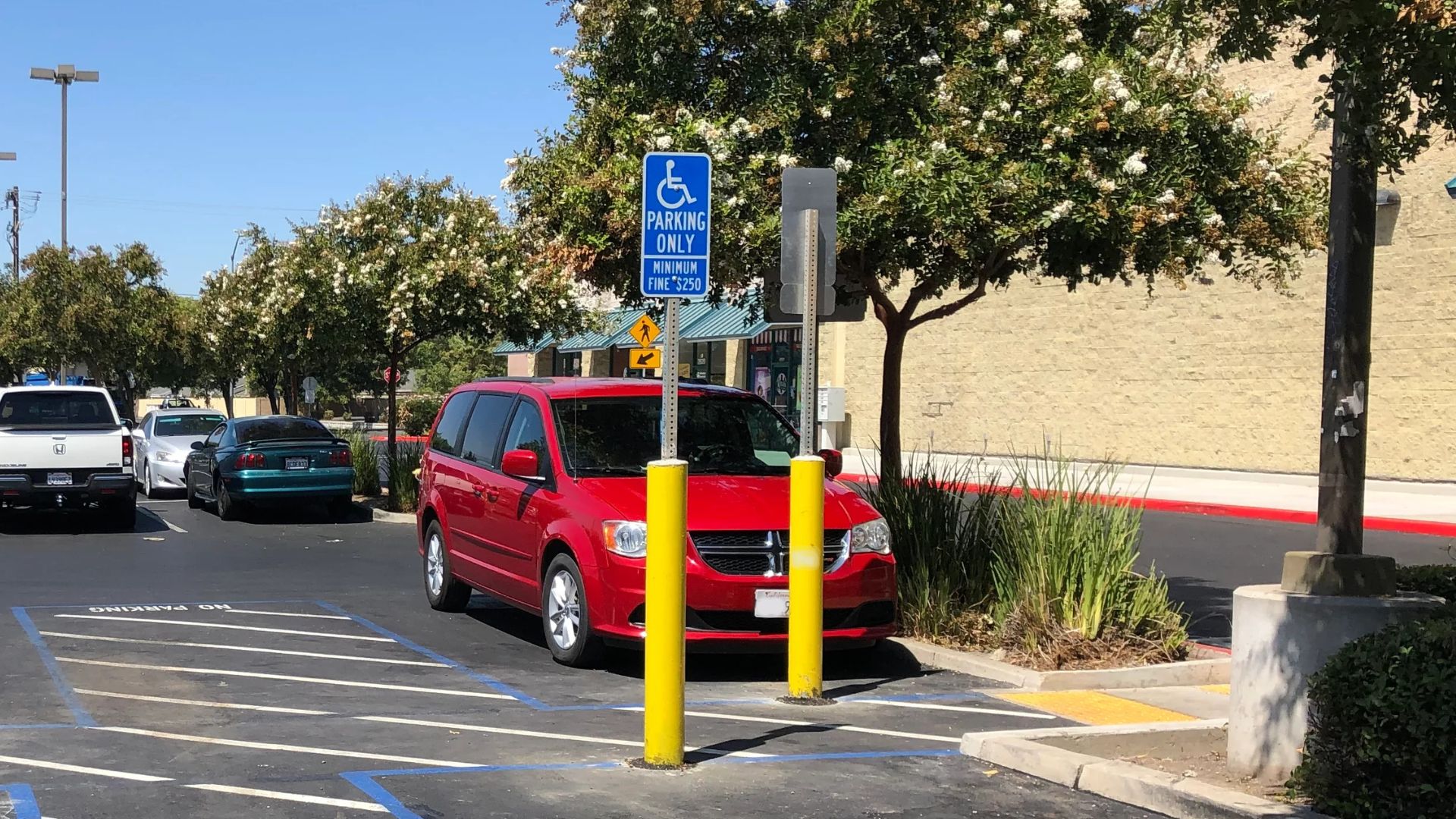
- ADA parking stalls and access aisles
- Curb ramps
- Sidewalk transitions
- Detectable warnings
- Accessible paths of travel
- Fire lanes
- Signage
- Wheel stops
- Bollards
- Other trip-hazard corrections
Handling these needs during a resurfacing project can be more efficient than bringing in separate contractors later. Advantage provides ADA retrofit, ramp, and handrail services along with asphalt, concrete, and related site improvements.
Striping and Site Restoration
A commercial overlay project often includes more than the asphalt itself.
The finished scope may also include:
- Parking stall striping
- ADA symbols and markings
- Fire lane markings
- Directional arrows
- Loading zones
- Curb painting
- Signage
- Wheel stops or bollards
Make sure these items are clearly identified when comparing proposals. A low bid may exclude striping, signage, or other work needed to reopen the property safely and efficiently.
Learn more about Advantage’s parking lot striping and signage services.
Access, Phasing, and Operating Constraints
Occupied commercial properties need more planning than an empty lot.
Costs can change when crews need to preserve:
- Tenant, customer, resident, or employee access
- Delivery routes
- Fire and emergency access
- Accessible pedestrian routes
- Limited parking availability
- Business operations during the day
- Tight work windows or weekend-only schedules
For many properties, the goal isn’t simply to install asphalt. It’s to complete the work with as little disruption as possible.
A well-planned project can divide the property into phases, maintain access where it matters most, communicate clearly with tenants or residents, and keep the site moving while the work is underway.
Asphalt Overlay vs. Mill and Pave vs. Full Replacement
Asphalt Overlay
An overlay is often a good fit when pavement has surface-level deterioration but the base remains generally stable.
Its main advantage is cost. It can restore the appearance and function of a parking lot without the expense of removing and rebuilding the entire pavement system.
Its limitation is that it can’t solve widespread structural failure below the surface.
Mill and Pave
Mill and pave is often the better option when a property needs more precise repair work or controlled pavement elevations near curbs, drains, entrances, and sidewalks.
It allows crews to remove existing asphalt before installing new material, which can create better transitions and reduce problems caused by adding too much pavement height.
It’s more involved than a basic overlay, but it can be the right middle ground between resurfacing and full replacement.
Full Replacement
Full replacement is usually the right solution when there is widespread alligator cracking, recurring potholes, major drainage failure, or extensive base damage.
It has the highest upfront cost, but it rebuilds the pavement system properly rather than covering a deeper problem.
If your lot needs rebuilding, our commercial pavement replacement and reconstruction services account for base preparation, drainage, and site logistics so the new pavement addresses the conditions that caused the failure.
For a closer look at that decision, read Parking Lot Repair vs. Resurfacing: Which Is Right for Your Property?.
When Is an Asphalt Overlay Worth the Investment?
An overlay may be a good fit when:
- The pavement base is generally stable
- Damage is mostly limited to the upper asphalt layer
- Cracks and failed areas can be repaired locally
- Drainage is functioning or can be corrected
- The property needs a cost-effective alternative to full replacement
An overlay may not be the right solution when:
- There is widespread alligator cracking
- Potholes or soft spots keep returning
- Water is undermining the pavement structure
- Heavy truck traffic has caused deep failures
- The current pavement elevation is already too high at curbs, doors, ramps, or drains
A site assessment helps determine whether resurfacing will provide a durable result or simply delay a larger repair.
How to Budget for a Commercial Parking Lot Overlay
The best budgeting process starts with the pavement itself, not a generic price-per-square-foot estimate.
Start by identifying repair, drainage, concrete, ADA, and striping needs. Then determine whether the work must be phased to keep customers, tenants, residents, deliveries, or emergency access moving.
When you compare proposals, make sure each contractor is pricing the same scope of work.
Questions worth asking include:
- What repairs are included before the overlay is installed?
- What asphalt thickness is specified?
- Is milling included where transitions require it?
- Are drainage corrections included or excluded?
- Does the proposal include striping, signage, and ADA markings?
- How will access be maintained during construction?
- What conditions could change the final project cost?
The goal isn’t just to find the lowest bid.
You want to understand what each proposal actually includes and whether the finished pavement will perform the way your property needs it to.
After resurfacing, ongoing maintenance can help protect your investment. Sealcoating and crack sealing and pavement preservation services can help extend pavement life when they’re used at the right time.
Get a Commercial Asphalt Overlay Plan for Your Property
A-1 Advantage Asphalt helps commercial property owners, property managers, HOAs, industrial facilities, municipalities, and institutional clients plan asphalt repair and resurfacing projects across Northern California.
Our team evaluates pavement condition, repair needs, drainage, ADA requirements, striping, and site logistics so you can make a confident long-term decision for your property.
Whether your lot needs localized repairs, a straightforward overlay, mill and pave, or more extensive replacement, we’ll help you identify the right scope and build a plan around your operations.
Schedule a site assessment right here and we’ll give you a tailored proposal.
Asphalt Overlay Cost FAQs
How much does a commercial asphalt overlay cost in Northern California?
For early budgeting, many commercial properties should plan on about $4–$7 per square foot for a typical resurfacing project. Straightforward overlays may cost less, while repair-heavy or logistically complex projects can cost more.
Is asphalt overlay cheaper than full replacement?
Usually, yes—when the underlying base is stable and the damage is primarily at the surface. It isn’t the right solution for pavement with widespread structural failure.
How long does an asphalt overlay last?
Its lifespan depends on the condition of the existing base, traffic loads, drainage, asphalt thickness, and ongoing maintenance. A site assessment is needed to determine whether an overlay is likely to provide a durable result.
Can a business or apartment community stay open during asphalt resurfacing?
Often, yes. Many projects can be phased to preserve access, though the right approach depends on site layout, parking availability, emergency access, traffic patterns, and operating hours.
Does asphalt overlay include striping and ADA updates?
It can. Striping, ADA markings, signage, curb ramps, wheel stops, bollards, and related work should be clearly included in the project scope when needed.
Last reviewed: July 2026


FOLLOW


STAY UP TO DATE
Thank you! Your submission has been received!
Oops! Something went wrong while submitting the form.
Contractor’s State License #762538 - #882596
Copyright ©2024 A-1 Advantage Asphalt. All Rights Reserved.
Website Built by RUSTY GEORGE.
Copyright ©2024 A-1 Advantage Asphalt. All Rights Reserved.
Website Built by RUSTY GEORGE.