

Commercial Asphalt Paving Cost in Northern California (2027): New Lots, Replacement, and Reconstruction

If “repave the parking lot” is a line in next year’s capital plan, you could be looking at three different budgets.
Paving might mean a straightforward remove-and-replace job, a full-depth reconstruction, or paving a new lot altogether. All three can cover the same square footage but still land in very different budget ranges.
The difference often comes down to what has to happen before the new asphalt goes down: demolition, grading, drainage, base preparation, access planning, and related concrete or ADA work.
We’ve helped hundreds of companies get the paving results they need on a cost-effective budget.
The ranges below are broad planning estimates, but they’ll help you build an early budget, understand what drives the price, and ask better questions when you request proposals. For a specific quote, get in touch and one of our estimators will get to work for you.
Quick Answer: What Does Commercial Asphalt Paving Cost in Northern California?
For early planning, Northern California commercial properties can use these general starting ranges:
- New commercial asphalt lot on a prepared or relatively uncomplicated site: approximately $7–$12 per square foot
- Removal and replacement of existing asphalt with limited base repair: approximately $8–$14 per square foot
- Full-depth reconstruction with substantial base, grading, drainage, or subgrade work: approximately $10–$18+ per square foot
These are planning ranges, not quotes from A1 Advantage Asphalt and Concrete.
Your actual cost will depend on the site, pavement design, traffic demands, access, phasing, and everything included in the finished scope. Major utility, stormwater, concrete, or accessibility work can push a project beyond these ranges.
If you want to be sure which range applies to your property, send us the property address and approximate square footage. An A-1 estimator will help determine whether you should be budgeting for an overlay, replacement, or reconstruction.
Contact us here to get started.
New Commercial Asphalt Lots: Approximately $7–$12 Per Square Foot
New asphalt construction starts with bare ground or a site being prepared for paving. The scope may include grading, drainage, aggregate base, compaction, asphalt placement, transitions, and striping.
The lower end is most realistic when the site is open, accessible, and straightforward. More excavation, imported base, soil correction, underground drainage, tight access, or frequent truck traffic will increase the budget.
If another contractor has already delivered a properly prepared aggregate base, the paving portion may cost less than a complete new-lot project. If the property needs broader site development, the total budget may be higher.
A1 provides commercial new pavement construction for parking lots, access roads, drive lanes, industrial yards, and other high-use surfaces across Northern California.
Asphalt Removal and Replacement: Approximately $8–$14 Per Square Foot
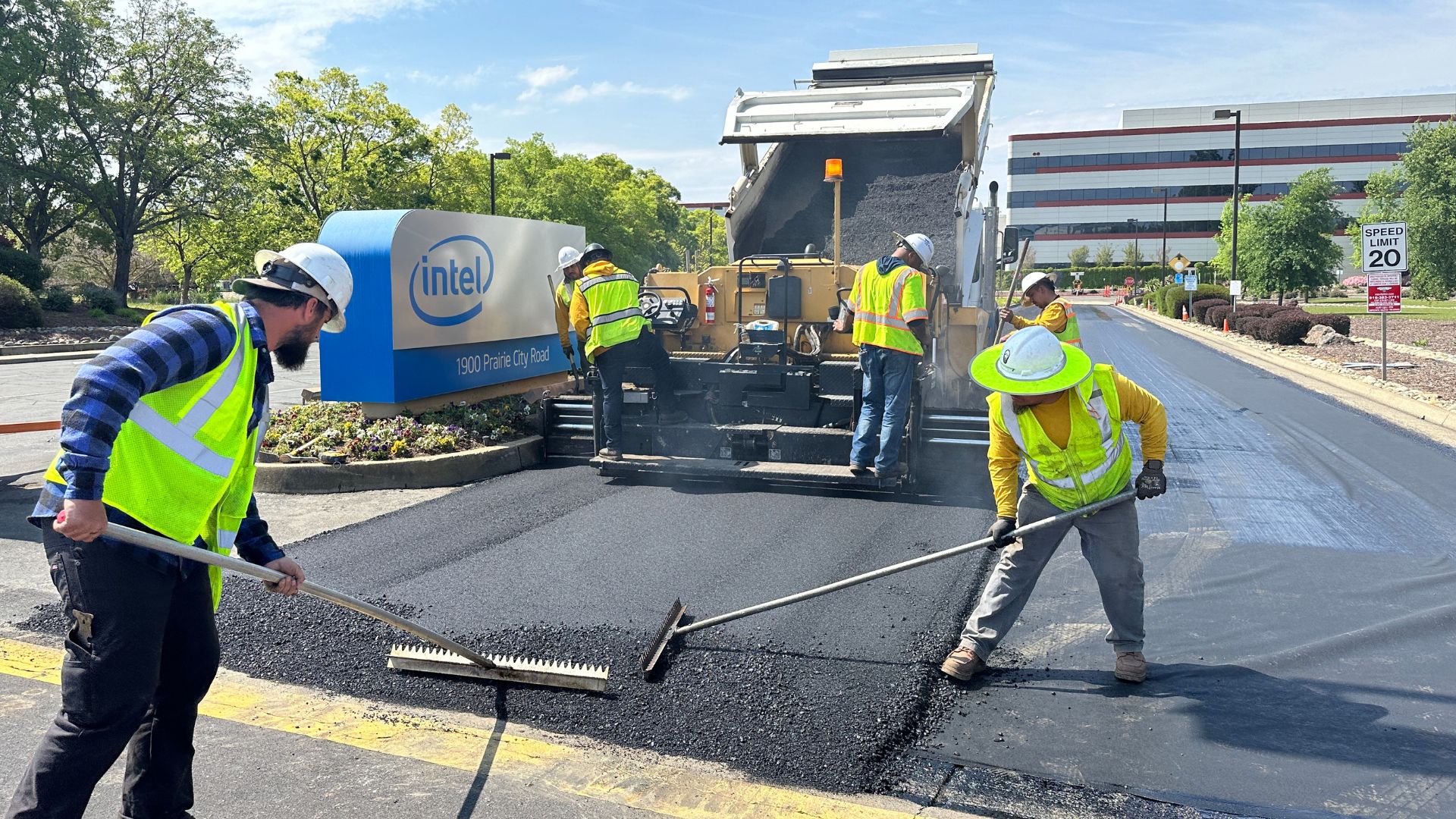
Removal and replacement usually means taking out the existing asphalt, evaluating the exposed base, repairing failed areas, and installing new pavement.
This approach may fit when deterioration extends through the asphalt but the entire base doesn’t need rebuilding. It also allows crews to correct elevations near curbs, drains, sidewalks, and entrances.
The amount of demolition and base repair makes a major difference. Widespread failures, multiple pavement layers, difficult haul routes, or extensive repairs will move the project higher.
When comparing proposals, confirm whether the price includes demolition, haul-off, base repairs, new asphalt, transitions, traffic control, and restriping. A lower square-foot number may simply cover less work.
Full-Depth Reconstruction: Approximately $10–$18+ Per Square Foot
Full-depth reconstruction rebuilds more of the pavement system. It’s generally considered when the asphalt and supporting materials have failed across significant portions of the property. Warning signs include widespread alligator cracking, deep rutting, soft areas, recurring potholes, major drainage problems, and repairs that keep failing.
Reconstruction may involve deeper demolition, removal or stabilization of failed base, additional excavation, grading corrections, new aggregate base, compaction, and new asphalt.
That’s why reconstruction has the broadest cost range. Rebuilding several concentrated failure areas is a different project from reconstructing an entire industrial yard with drainage and subgrade problems.
What Has the Biggest Effect on Commercial Asphalt Paving Cost?
Base, Subgrade, and Drainage Conditions
Soft soils, weak base material, poor compaction, and water infiltration can all increase the work required before paving. Ponding water and recurring failures often point to a drainage or structural problem that new surface asphalt won’t correct.
Traffic and Pavement Design
A passenger-vehicle parking area doesn’t face the same demands as an industrial yard, loading area, delivery route, or fire lane. Vehicle weight, turning movements, traffic volume, and intended use influence the pavement design.
There isn’t one standard asphalt thickness that works for every commercial property. Caltrans notes that traffic, climate, geology, materials, construction, and economics all influence flexible pavement design.
Project Size and Mobilization
Larger, straightforward areas often cost less per square foot because mobilization, equipment, and crew costs are spread across more pavement. Narrow drive lanes, irregular shapes, disconnected work zones, and inefficient truck access can add cost.
Access, Scheduling, and Phasing
An empty site is simpler to pave than a busy shopping center, medical property, apartment community, school, or industrial facility that needs to remain operational.
Costs may increase with night or weekend work, multiple phases, temporary traffic control, limited staging, or continuous access requirements. Good phasing can reduce disruption, but it needs to be planned before work starts.
Concrete, ADA, Striping, and Related Work
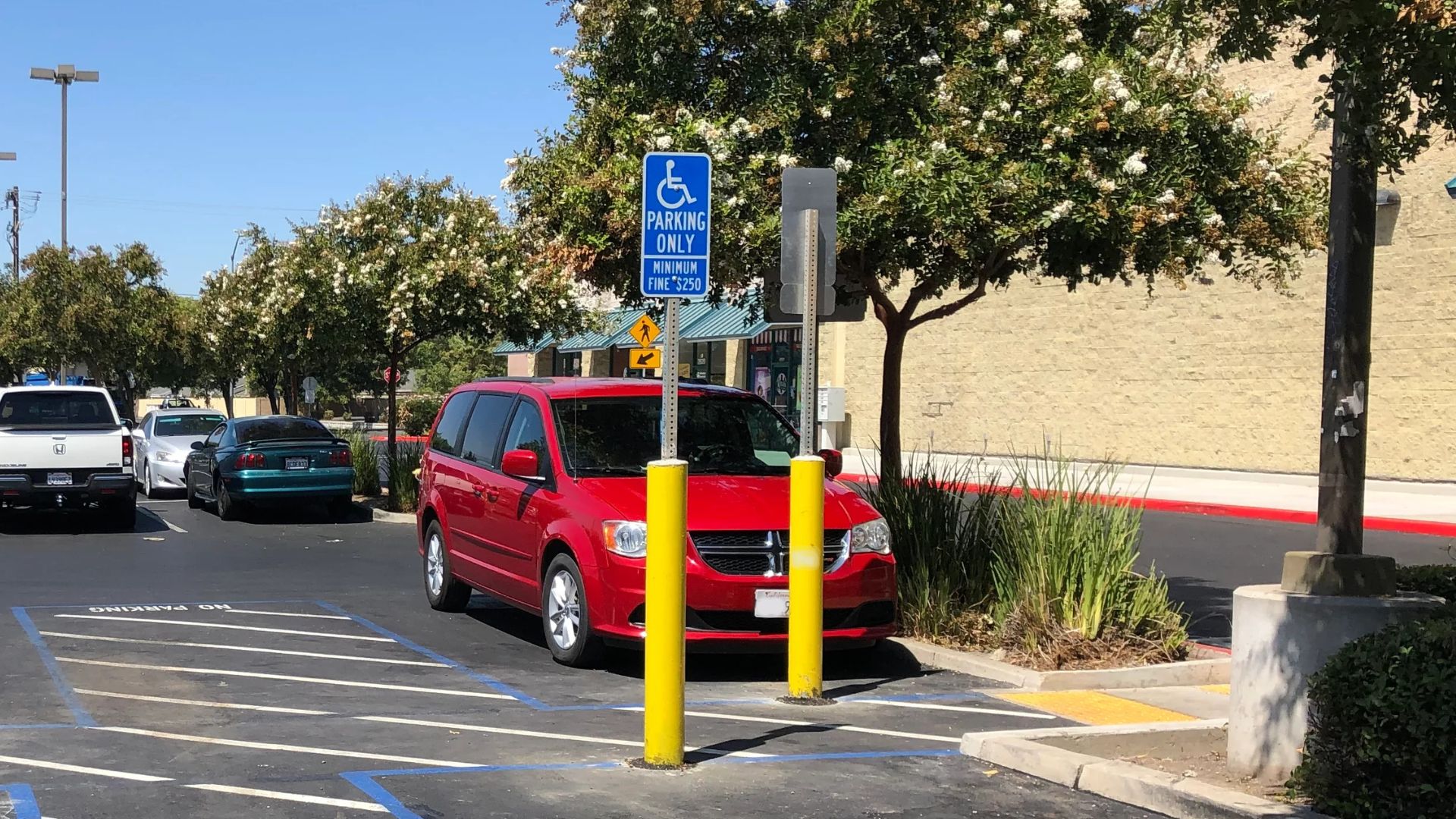
Asphalt paving may not be everything needed to reopen the property. The scope might also include curbs, sidewalks, curb ramps, accessible parking, signage, fire lanes, wheel stops, drainage structures, and parking lot striping.
Paving is also a smart time to review applicable accessibility, drainage, fire-access, and marking requirements. Advantage’s guide to commercial parking lot paving standards in California explains what property teams should consider.
Overlay vs. Replacement: Are You Budgeting for the Right Scope?
When the existing pavement structure remains stable, an asphalt overlay can restore the surface at a lower cost. In Northern California, many commercial overlay projects fall around $4–$7 per square foot, while repair-heavy or logistically complex resurfacing can reach $7–$10+.
An overlay won’t solve widespread base failure, recurring water problems, or deep structural cracking. If those conditions are present, replacement or reconstruction may deliver better long-term value despite the higher initial cost.
For a closer comparison, see Advantage’s guides to asphalt overlay cost in Northern California and parking lot repair vs. resurfacing.
How to Build a More Reliable Preliminary Budget
Start by measuring the paved area. Then separate new paving, straightforward replacement, and visibly failed areas rather than applying one number to the entire property.
Identify related drainage, concrete, accessibility, striping, and signage needs. Note constraints such as delivery windows, tenant access, peak hours, or emergency routes.
For example, a 20,000-square-foot remove-and-replace project using an $8–$14 range produces an early allowance of $160,000–$280,000. That’s useful for capital planning, but a site evaluation is still needed to determine the base work and complete scope.
If you’re planning your paving budget for the next 12–24 months, we can evaluate your pavement and help establish a realistic capital budget before you're ready to put the project out to bid.
Contact us today and we’ll schedule a site eval.
What to Compare in Commercial Asphalt Paving Proposals
Make sure every contractor is pricing the same work. Ask:
- What existing materials will be removed, and is haul-off included?
- What base or subgrade repair is included?
- What pavement section and asphalt thickness are specified?
- Are drainage, concrete, ADA, striping, and signage included or excluded?
- How will phasing, access, and traffic control be handled?
- Which site conditions could change the final price?
A clear proposal should explain what’s being built, how the work will affect your property, and where additional costs could arise.
Get a Commercial Asphalt Paving Plan for Your Property
A1 Advantage Asphalt and Concrete helps commercial, industrial, municipal, institutional, and HOA property teams plan paving projects across Northern California. We evaluate pavement condition, drainage, traffic demands, access, phasing, and related site needs to help define the right scope.
Request a site evaluation and quote.
Commercial Asphalt Paving Cost FAQs
How much does commercial asphalt paving cost per square foot in Northern California?
For early planning, new commercial asphalt lots may cost approximately $7–$12 per square foot, removal and replacement may cost $8–$14, and full-depth reconstruction may cost $10–$18+. Site conditions and scope can move a project outside these ranges.
Is it cheaper to pave a new parking lot or replace an existing one?
It depends on site preparation. Replacement includes demolition and haul-off, but a new lot may require excavation, grading, drainage, and a new aggregate base. Either project can cost more depending on what the site needs before paving.
What is included in full-depth asphalt reconstruction?
Full-depth reconstruction generally includes removing failed asphalt, addressing damaged supporting materials, preparing and compacting the base, and installing new pavement. Grading, drainage, concrete, ADA work, striping, and other improvements should be confirmed in the proposal.
How do I know whether my parking lot needs an overlay or full replacement?
An overlay may work when deterioration is mainly at the surface and the base remains stable. Widespread alligator cracking, deep rutting, soft areas, recurring potholes, or major drainage problems can indicate that replacement or reconstruction is needed.
Does commercial asphalt paving include striping and ADA improvements?
It can, but don’t assume those items are included. Ask whether the proposal covers restriping, accessible stalls and markings, signage, curb ramps, concrete transitions, and other work needed to reopen the property.


FOLLOW


STAY UP TO DATE
Thank you! Your submission has been received!
Oops! Something went wrong while submitting the form.
Contractor’s State License #762538 - #882596
Copyright ©2024 A-1 Advantage Asphalt. All Rights Reserved.
Website Built by RUSTY GEORGE.
Copyright ©2024 A-1 Advantage Asphalt. All Rights Reserved.
Website Built by RUSTY GEORGE.