

When Does a Commercial Parking Lot Need Full Reconstruction?
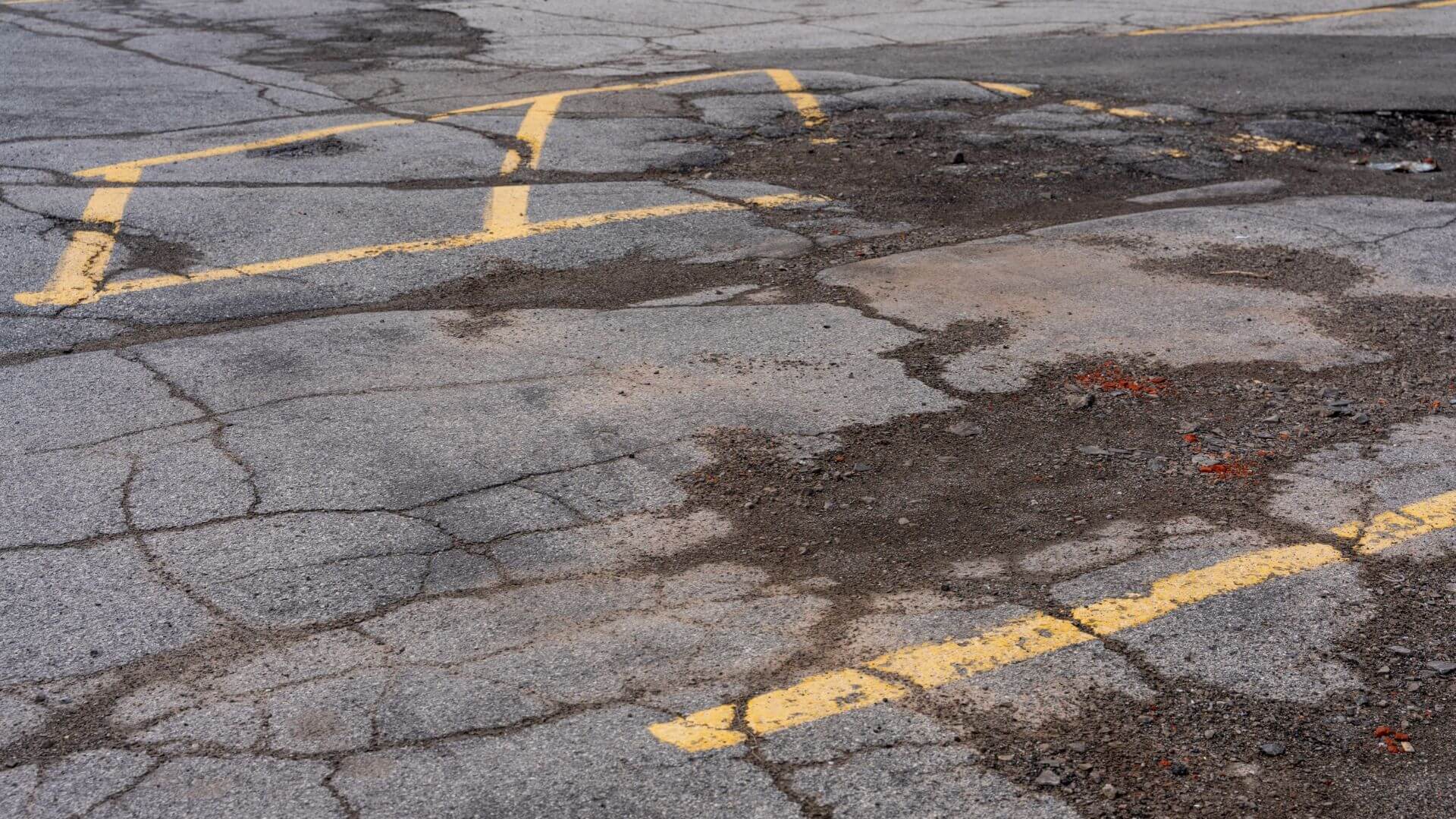
Before you approve another round of parking lot repairs, find out why the same areas keep failing.
A commercial parking lot may need full reconstruction when widespread structural failure makes localized repairs or resurfacing inadequate. Isolated failures may need only full-depth repairs.
A-1 Advantage Asphalt and Concrete’s full-time estimators help Northern California property teams define the scope around pavement condition, drainage, traffic demands, and operating needs.
Our work includes maintaining parking lots and entry roads at Intel’s headquarters.
Five Signs Your Parking Lot May Need Reconstruction
Typically there’s no one sign that proves your parking lot needs to be rebuilt. But these signs warrant a closer evaluation.
Widespread Alligator Cracking
Alligator cracking forms a network of small, interconnected cracks, often where vehicles travel. It can indicate fatigue from repeated loading. As it progresses, pieces of asphalt may loosen and break away.
Asphalt Institute guidance identifies insufficient pavement thickness, excessive loading, and weak supporting soils as possible contributors. Map how far the cracking extends; a concentrated failure and widespread deterioration call for different scopes.
Potholes and Patches That Keep Failing
If the same potholes return after repairs, ask what the previous work addressed. A surface patch may have left wet or unstable material underneath. Poor repair construction can also contribute. Recurring damage calls for investigating the cause before approving another repair.
Significant Rutting or Settlement
Wheel-track depressions, sinking pavement, and uneven transitions can signal deformation within the asphalt or supporting layers. The location and severity matter. A contractor should determine where the movement originates before recommending an overlay, asphalt replacement, or deeper reconstruction.
Soft or Moving Pavement
Pavement that shifts under vehicles deserves prompt attention. Water or fine material pushed through cracks under traffic, called pumping, can indicate moisture and deteriorated support. Covering that area with new asphalt won’t resolve an unstable foundation.
Drainage Problems Alongside Pavement Damage
Standing water is a reason to investigate drainage. Concern increases when ponding occurs alongside recurring potholes, settlement, or cracking. The scope should identify whether blocked drainage, surface grades, or subsurface moisture is contributing to the failure.
If your lot has recurring potholes, spreading cracks, or sinking pavement, request a parking lot evaluation. We’ll help you determine whether repairs, resurfacing, or reconstruction make sense for your property.
Does the Entire Parking Lot Need to Be Rebuilt?
The location and extent of failure help determine whether targeted work is enough. A damaged truck-turning area or isolated soft spot may be a candidate for full-depth repair while the surrounding pavement remains usable.
Asphalt replacement and reconstruction of the supporting layers involve different scopes. Removing and replacing the full thickness of asphalt doesn’t automatically mean rebuilding all the aggregate base and underlying soil, or subgrade.
When suitable supporting materials remain, they may be retained. If weak materials or inadequate drainage affect large portions of the lot, broader reconstruction may be warranted.
An overlay may remain an option where the existing pavement provides adequate support. If you’re still comparing treatments, our parking lot repair vs. resurfacing guide explains the broader choices.
How A-1 Evaluates Your Parking Lot and Plans the Work
Our estimators review pavement damage, past repairs, drainage, and vehicle loads. Truck routes and loading areas may need a different pavement design than passenger parking.
Where the cause or depth of failure is unclear, pavement cores, test pits, or additional testing may be needed before finalizing the scope.
We plan construction around entrances, deliveries, tenant access, and emergency routes. Phasing depends on the layout and construction requirements.
A-1 coordinates site preparation and drainage with paving, concrete, striping, and applicable ADA work. That keeps related scopes in one construction plan. Our California parking lot paving standards guide explains related requirements.
What Full Parking Lot Reconstruction Involves
Full parking lot reconstruction means removing failed asphalt, repairing or rebuilding supporting layers as needed, and installing new pavement. The exact removal depth and area depend on the evaluation and design. A typical sequence includes:
- Remove failed pavement. Establish the work limits and remove the asphalt needed to expose the supporting materials.
- Address unsuitable support. Repair, replace, or stabilize failed base or subgrade as specified. Retain suitable materials where the design allows.
- Correct grading and drainage. Address contributing water problems and establish appropriate elevations and transitions before paving.
- Install and compact the pavement. Use the asphalt materials and thicknesses specified for the site’s traffic and conditions.
- Complete the related work. Finish concrete transitions, striping, signage, and other improvements included in the proposal.
Confirm which items are included. Drainage structures, concrete repairs, accessibility work, and restriping can materially affect the finished scope.
We manage commercial asphalt paving and replacement from site preparation through paving and final striping. We also provide site development services for related grading, excavation, and drainage needs.
When Repeated Repairs Stop Making Financial Sense
Look at repair spending over time, along with how much usable pavement each repair preserves. Rebuilding a localized failed area can be a sensible investment. Repeatedly patching expanding failures without correcting their cause may provide little lasting value.
Compare viable options over the same planning period. Include likely follow-up maintenance, recurring closures, and the impact on tenants or operations. A lower initial price can come with more frequent work; a larger project still needs to justify its scope.
Temporary repairs can be appropriate while you secure funding or schedule a capital project. Be clear about whether the work is intended as a short-term measure or a durable repair.
For budget context, see our commercial asphalt paving cost guide for Northern California. The right comparison starts with proposals that price the same necessary work.
Before you commit to full reconstruction, request a parking lot evaluation and quote. Share your property address, photos of the damaged areas, and access requirements so we can help define the right scope.
Get a Reconstruction Scope That Fits Your Property
A-1 Advantage Asphalt and Concrete helps Northern California property teams plan paving projects around pavement condition, drainage, traffic demands, and operating needs.
Before you commit to full reconstruction, request a parking lot evaluation and quote. Share your property address, photos of the damaged areas, and access requirements so we can help define the right scope.


FOLLOW


STAY UP TO DATE
Thank you! Your submission has been received!
Oops! Something went wrong while submitting the form.
Contractor’s State License #762538 - #882596
Copyright ©2024 A-1 Advantage Asphalt. All Rights Reserved.
Website Built by RUSTY GEORGE.
Copyright ©2024 A-1 Advantage Asphalt. All Rights Reserved.
Website Built by RUSTY GEORGE.